What Digital Printing Actually Means for Flexible Packaging
For buyers comparing digital printing flexible packaging with conventional production, the first obstacle is usually a minimum order of ten thousand pieces or more. The phrase “digital printing” often appears beside “low MOQ,” but the commercial value is easier to judge once the process and its cost structure are separated clearly.
This article is about digital printing for flexible packaging: pouches, sachets, and roll stock film for coffee, pet food, supplements, snacks, and personal care products. It is not about buying a digital printing press or opening a print shop. Those are different markets with different economics.
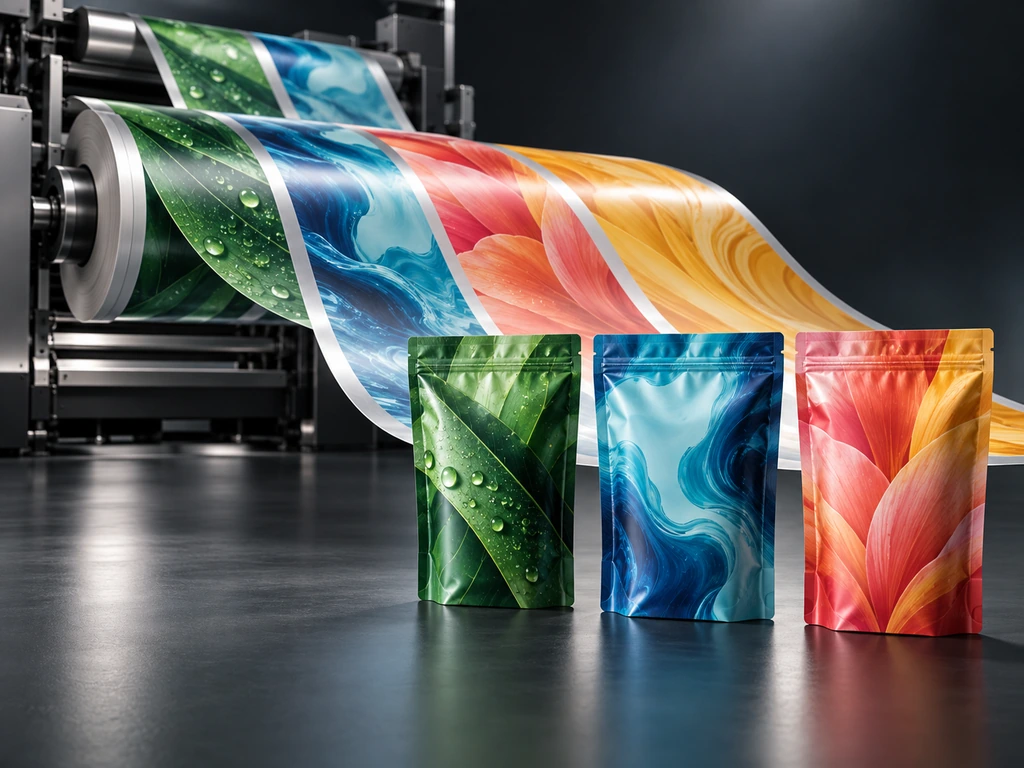
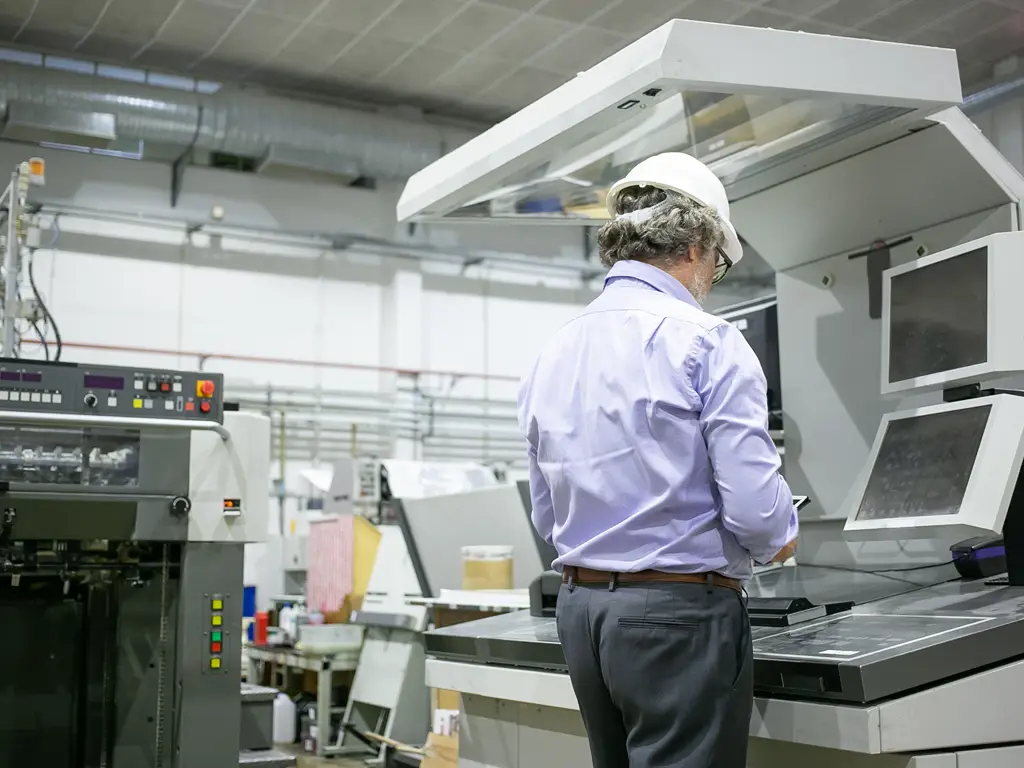
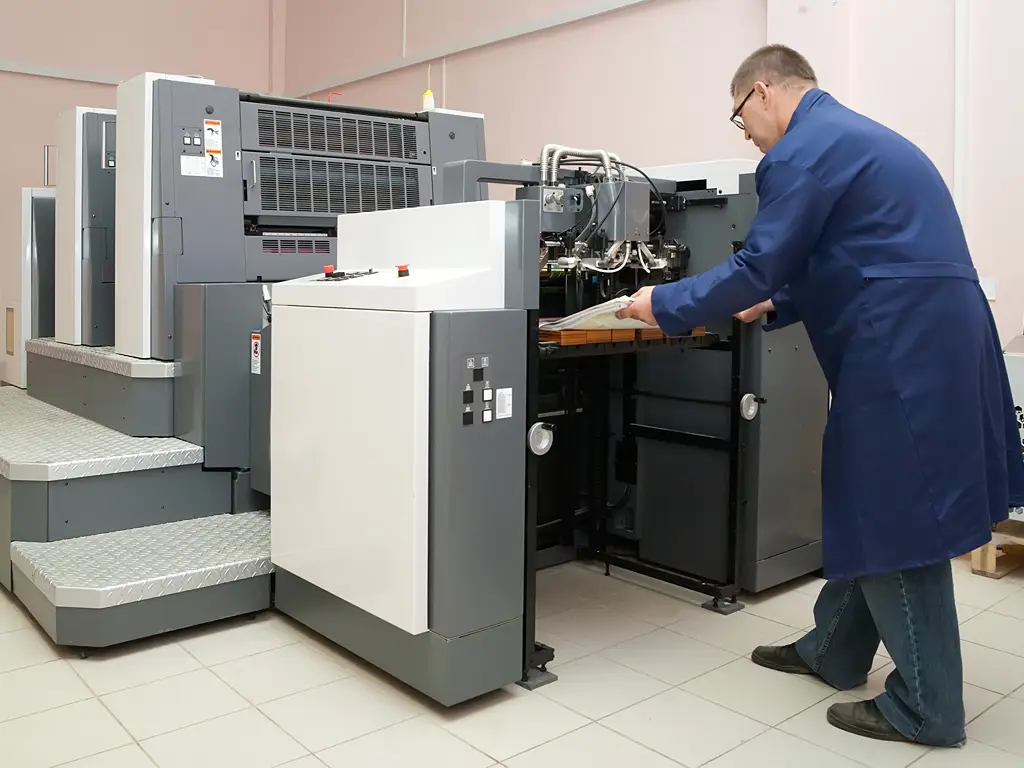
With that settled: digital printing is the plate-free way to print packaging. The artwork is imaged directly onto the film, one impression at a time, with no engraved cylinders or flexo plates in between. Conventional printing works the other way around. Every color in your design needs its own physical plate or cylinder, engraved before a single bag is made.
That one structural difference, the absence of plates, drives everything else in this article:
- No plate or cylinder fees. The fixed pre-press cost that dominates a conventional quote simply doesn’t exist.
- Low minimum orders. Without a cylinder to pay off, there is no economic reason to force a five-figure order.
- Redesigns without penalty. A new artwork is a new file, not a new set of engraved metal.
For buyers, digital printing shows up in familiar forms: printed coffee bags with valves, pet food pouches, supplement pouches, and flat sachets. It also covers roll stock film for automatic fill-seal lines. If your product lands on a shelf in a pouch, it can almost certainly be made this way.
The real question is what plate-free actually changes in your quote. That’s a money question, and it deserves a money answer.
How Going Plate-Free Changes the Cost Structure
Three cost models, three shapes
Every flexible packaging quote is built on one of three cost models. Rotogravure carries a fixed cylinder cost for each color, then a very low unit price that gets better as the run gets longer. Flexo sits between the two: cheaper plates than gravure, lower detail, and minimums that still start in the thousands. Digital has no fixed pre-press cost at all, and a unit price that stays roughly flat whether you print 500 pieces or 5,000.
So the curves cross. That crossing point, not any generic claim that “digital is cheaper,” is the entire decision.
Where the break-even sits
Industry rules of thumb often place the practical crossover in the low tens of thousands per design, but there is no universal break-even. Bag dimensions, film structure, ink coverage, SKU count, and tooling cost can move it sharply. Treat 30,000 pieces as a signal to request both digital and gravure quotations, not as an automatic process decision.
The useful break-even is not unit price alone. Compare tooling, total printed inventory, expected sell-through, storage, and the cost of a likely artwork change over the next year. A digital quote can carry a higher piece price and still create the lower cash exposure for an unproven SKU.
For one concrete calibration, our published digital-vs-plate comparison shows a digital MOQ of 500 pieces with a 7–10-day turnaround, versus 10,000 pieces and 23–25 days on the plate route. Exact figures vary by factory, but the shape of that table — a large MOQ gap and a much longer plate lead time — shows what tooling does to a quote.
The hidden costs nobody quotes
The plate fee on the quote sheet is only the first installment. The full cost of going the plate route includes:
- Forced inventory. A 10,000-piece minimum means paying for 10,000 units whether you sell 3,000 or 30,000 this quarter.
- Capital tied up in film instead of marketing. Money sitting in a warehouse of pouches is money not spent acquiring customers.
- Remake costs on every artwork change. New flavor, new regulation, refreshed logo: every one of them re-engraves the cylinders, in full, per color.
- Storage and obsolescence. Printed film ages, packaging regulations shift, and designs date. Obsolete printed stock is written off at 100%.
Multiply any of these across a product line instead of a single SKU and the math tilts further. Thirty designs at eight-plus colors each means roughly 240 cylinders before the first bag ships.
Digital vs. Plate Printing: The Five Numbers That Move a Quote
| Cost item | Digital (plate-free) | Plate (flexo / gravure) |
|---|---|---|
| Cylinder or plate fee | None | One per color, engraved upfront |
| Minimum order | ~500 pcs | ~10,000 pcs typical published minimums range 5,000–20,000+ |
| Lead time | 7–10 business days | 23–25 days (plate engraving adds a week or more) |
| Colors per design | No practical limit | Up to ~10, each needing its own plate |
| Multi-SKU runs | Multiple SKUs can share one press run (split run) | Each design runs separately |
Remember that a quote without a process label next to it can’t be compared against anything. Keep that in mind for the supplier checklist later.
A “low” unit price on a 20,000-piece plate-path minimum is not a low price. Before comparing any two quotes, make each supplier state the process path (digital / flexo / gravure), the MOQ, and the lead time in writing: three numbers, three labels, or the quotes aren’t comparable.
When Digital Printing Wins — and When It Doesn’t
Cost structure tells you how each process charges. It doesn’t tell you which one fits your product line. Four variables do that, and you can run them yourself in about five minutes.
The four variables that decide it
Order size per SKU. Under roughly a few thousand units per design, digital’s flat unit price wins because there is nothing to amortize. Sustained volumes in the tens of thousands per SKU swing to gravure, where the low unit price finally pays off the cylinders.
SKU count. Plate fees are per design and per color, so a wide line multiplies the fixed costs. A 12-flavor line on the plate path isn’t one minimum order, it’s twelve. Digital treats an SKU as a file, so width is nearly free.
Redesign frequency. Seasonal editions, regulatory label changes, refreshed branding. Every change remakes the plates on the conventional path. If your artwork changes more than about once a year, that recurring cylinder bill belongs in your comparison.
Variable data. Serial numbers, batch codes, region-specific panels. Content that differs from bag to bag is physically impossible on a fixed cylinder, and trivial on a digital press.
Scenario plays
Run the four variables against common situations and a pattern appears:
The trend line
Those scenarios are converging on the same direction, and the market data backs it. Smithers forecasts digital print on flexible packaging to grow at an 11.6% CAGR through 2030 (Smithers, 2025). The same study puts digital’s share of total packaging print value at 5.8%, about $36.9 billion, by 2030 (Smithers, 2025). HP, whose Indigo presses dominate the digital pouch segment, calls on-demand flexible packaging the fastest-growing market in the printing industry (HP).
The driver isn’t fashion. Product lines are getting wider and lifecycles shorter, and plate-based economics punish both.
The most concrete single fact in this whole article is what that shift looks like on one real order:
We helped a start-up compare a 30-SKU launch that would have required roughly 150,000 units of minimum inventory and about 240 engraved cylinders on the conventional path. The digital production route carried zero plate fees and let every SKU run at its own quantity.
One launch, two cost paths
units of forced minimum inventory, plus 240 engraved cylinders
plate fees — every SKU ordered at its own quantity
Where digital loses
Honesty requires the other side of the ledger:
- Single-SKU volumes past roughly 30,000 units in steady repeat orders. Digital’s unit price premium compounds; gravure amortizes.
- Special ink systems or extreme barrier structures. High-temperature retort applications and some foil-heavy structures need case-by-case confirmation of what the digital line can laminate and seal, so ask before assuming.
- Ultra-wide or unusual formats. Press web widths have limits; oversized formats may only exist on conventional equipment.
None of these are secret. Any competent converter will tell you them — eventually. Better to walk in already knowing.
Matching Bag Types and Structures to Digital Printing
The most common technical worry sounds like this: “if the printing changes, does the packaging itself get worse?” It doesn’t, and the reason is structural. In a laminated pouch, printing happens on the outer printable layer only. The layers underneath stay the same: a barrier layer (aluminum foil, VMPET, or PET) and a heat-seal inner layer (PE, CPP, or VMCPP). Neither cares whether the outer layer was printed digitally or on plates. Barrier performance is a property of the structure, not of the print method. A typical three-layer roll stock structure reads: inner PE/CPP/VMCPP for sealing, middle AL/VMPET/PET for barrier, outer PET/PA/MOPP for print (roll stock film specs).
That structure knowledge turns directly into purchasing language. When you brief a supplier, these are the numbers that appear on a real spec sheet (stand-up pouch specs, mylar bag specs). Film thickness runs around 100 microns for a standard stand-up pouch body, or 120 microns for mylar-style bags, in constructions like MOPP/VMPET/PE. Side and bottom seals take 7–9 mm, with a tear notch 15 mm from the top. Closures come as a standard 13 mm zipper or a 28 mm child-resistant version. Roll stock winds onto 3- or 6-inch cores, left- or right-handed to match your filling line. You don’t need to know why each number exists. You need to put them in your RFQ so two quotes describe the same bag.
The workflow on a digital line is shorter at every step. Artwork goes in, and a digital proof comes back within days because no cylinders need engraving. A physical sample follows for approval. Then print, laminate, slit, and convert. Published digital turnaround runs 7–10 business days from confirmation to shipment, against 23–25 days for the plate route (published comparison).
Then match your product to a bag format, with an exit condition for each:
Bag Format × Digital Printing Fit
| Bag format | Digital fit | Best used for | When to switch to plates |
|---|---|---|---|
| Stand-up pouches | Excellent (the flagship digital format) | Coffee, pet food, supplements, dry goods | Single design sustained past ~30k units/run |
| Flat pouches / sachets | Excellent | Sample-size cosmetics, single-serve food, trial packs | Same volume rule as stand-up |
| Kraft paper laminates | Very good | Organic-positioned dry foods, artisan brands | Rarely needed; the switch is volume-driven only |
| Mylar bags | Very good | High-barrier storage, multi-SKU resale programs (incl. child-resistant zippers) | Volume rule applies |
| Spout pouches | Possible, confirm per structure | Liquids: beverages, gels, refills | Complex spout/laminate combos may ride conventional lines; confirm first |
| Roll stock film | Excellent | Automatic fill-seal lines; 3” or 6” cores, L/R winding | Ultra-high-barrier + long-run combos |
This is the table to paste into your own RFQ. What’s left is figuring out whether the supplier on the other end can actually deliver it.
We digitally print stand-up, kraft, mylar, spout and flat pouches plus roll stock, with custom structures, closures and finishes. Send us your dimensions and product requirements for a quote that labels the process path, MOQ, tooling and lead time.
Request a labeled quoteHow to Qualify a Digital Packaging Supplier
Five checks, in order. Each one has caught real buyers out.
Step 1. Ask which process path the quote assumes. Get the answer in writing: digital, flexo, or gravure, and at what MOQ. This one question defuses the entire MOQ mess from the last section, because a plate-path quote with a “low” unit price is not low at all once 20,000-piece minimums enter.
Step 2. Verify the presses are real and in-house. Ask the equipment model and how many print lines the factory runs. A plant that owns its digital presses controls its own calendar; a broker outsources and inherits everyone else’s delays. Published capacity facts (number of production lines, printing machines, bag-making machines) should be easy for a real factory to state.
Step 3. Order samples and define the color check. Ask whether stock samples are free and what a custom printed sample costs. Then agree on acceptance: Pantone references for brand-critical colors, checked against a signed proof. Digital holds color consistency across a run better than a plate swap does, but the first-article check is still your job, not theirs.
Step 4. Get MOQ and lead time as labeled numbers. “Fast” is marketing. “7–10 business days from artwork approval” is a commitment you can hold. Insist on the same format for MOQ: a piece count tied to the process path.
Step 5. Check multi-SKU and variable-data track record. Split runs and serialization are the capabilities that exist only on digital, so they’re also the fastest way to separate real digital shops from printers who sub-contract. Ask for a case where one order covered multiple SKUs at different quantities. Shops that have done it will show you one; shops that haven’t will change the subject.
Run all five and you’ll have two or three suppliers who survive: not a list of names, but a checklist any candidate either passes or fails.
The five-check qualifier
Who Can Print Your Pouches Digitally
So who clears that bar? The profile, assembled from everything above, is specific. Look for a converter with its own digital presses (more than one line, ideally) and a published MOQ in the hundreds rather than tens of thousands. Look for a written 7–10 day turnaround, free stock samples with custom samples available, and a bag-format range that runs from stand-up pouches through kraft laminates and mylar to roll stock. The rarest line on the resume: real split-run and serialization cases.
Geography matters less than buyers assume, but it isn’t irrelevant. The flexible packaging supply chain is heavily concentrated in China’s Guangdong manufacturing belt. Most export-focused converters there are set up for exactly this trade: air and sea freight options, USD wire transfers, and trade-assurance order channels. That combination keeps an overseas first order low-risk.
Suppliers matching that profile are findable and verifiable, which is the point of the checklist. The last thing to work out is what their existence changes about how you run the packaging side of your business.
The Distributor’s Math: Digital Printing as a Portfolio Strategy
If you distribute or resell packaging, or you’re a brand managing dozens of SKUs, the plate-free shift goes beyond any single order. It changes how the whole portfolio is financed. The conventional path makes every SKU a bet: engraved cylinders up front, a five-figure minimum behind them, and payback that depends on the SKU selling through. Wide assortments don’t just cost more on the plate path; they concentrate risk in exactly the SKUs you know least about.
Digital restructures that bet. The trial unit drops from ten thousand pieces to hundreds. Restock cycles compress from a month-plus to 7–10 business days. A test SKU that works gets refilled before it stocks out; one that doesn’t dies at a few hundred units of exposure instead of ten thousand. Serialization adds a service layer on top. In one published case, a brand printed unique serial numbers across a 30-plus-SKU program at 200 pieces per SKU. That gave them stock traceability no cylinder could produce (case notes).
The portfolio logic that falls out of the math:
One Portfolio, Two Process Paths
| Runner SKUs (steady volume) | Test, seasonal & long-tail SKUs | |
|---|---|---|
| Best-fit process | Gravure/flexo (unit price amortizes the plates) | Digital (no fixed cost to recover) |
| Inventory risk | Low (predictable sell-through) | Contained: hundreds of units per bet |
| Restock cadence | Large, infrequent orders | 7–10 day cycles, order to sell-through |
| Margin logic | Volume margin | Assortment margin + differentiation (serialization, fast refresh) |
The stance worth stating plainly: tilt the portfolio’s digital share up. Keep the two or three proven volume movers on plates where the unit price belongs, and move the testing, the seasonal work, and the long tail to digital. The two processes aren’t competitors for your whole business; they’re different floors of the same building.
That split is only as good as the digital side’s execution, though. The portfolio works when the digital supplier behaves like one. That means published turnaround of 7–10 business days against 23–25 on the plate route, and split runs as a standard capability rather than a favor (our published digital-vs-plate turnaround and MOQ table). We run our own digital presses for exactly this reason. The split-run numbers behind this section are public: one long-term customer orders 10 SKUs in per-SKU quantities from 100 to 1,000 pieces, reordered as sell-through dictates (how we ran a 10-SKU split run).
Start with your own numbers. Take your slowest-moving SKU, price it both ways with the process labeled, and the portfolio will tell you where the line sits.
Plan Your Plate-Free Packaging Run With Us
We support digital orders from 500 pieces, 7–10-day production, split runs, serialization and deep customization without plate or cylinder fees. Send us your SKU quantities and target launch date for a labeled digital-versus-gravure recommendation.
Discuss Your Print RunReferences
- Smithers. “The Future of Digital Print for Packaging to 2030.” 2025.
- Smithers. “Corrugated and Flexibles Drive Digital Print for Packaging.” 2025.
- HP. “HP Indigo Flexible Packaging Printing Solutions.” n.d.