
Introduction
Efficiency, protection, and cost-effectiveness are the most important factors in the intricate product packaging environment. This type of packaging, roll stock, allows businesses that are expanding in their operations to implement automation as a crucial step in the movement, and at the center of this move is a versatile and powerful medium that is roll stock. Although consumers might be accustomed to ready-made pouches and hard-sided containers, roll stock is the industrial workhorse that allows high-speed production of a whole host of products on the shelves of stores today.
This is an authoritative guide regarding roll stock, also known as rollstock film. We are going to discuss its basic features, the mechanics of its implementation, its great advantages in the face of other forms of packaging, and the main issues to keep in mind when incorporating it into your business processes. Being a specialized type of flexible packaging, the knowledge of roll stock is crucial to any company that intends to streamline its packaging process and grow on a scale that is scalable.
What Is Roll Stock Packaging?
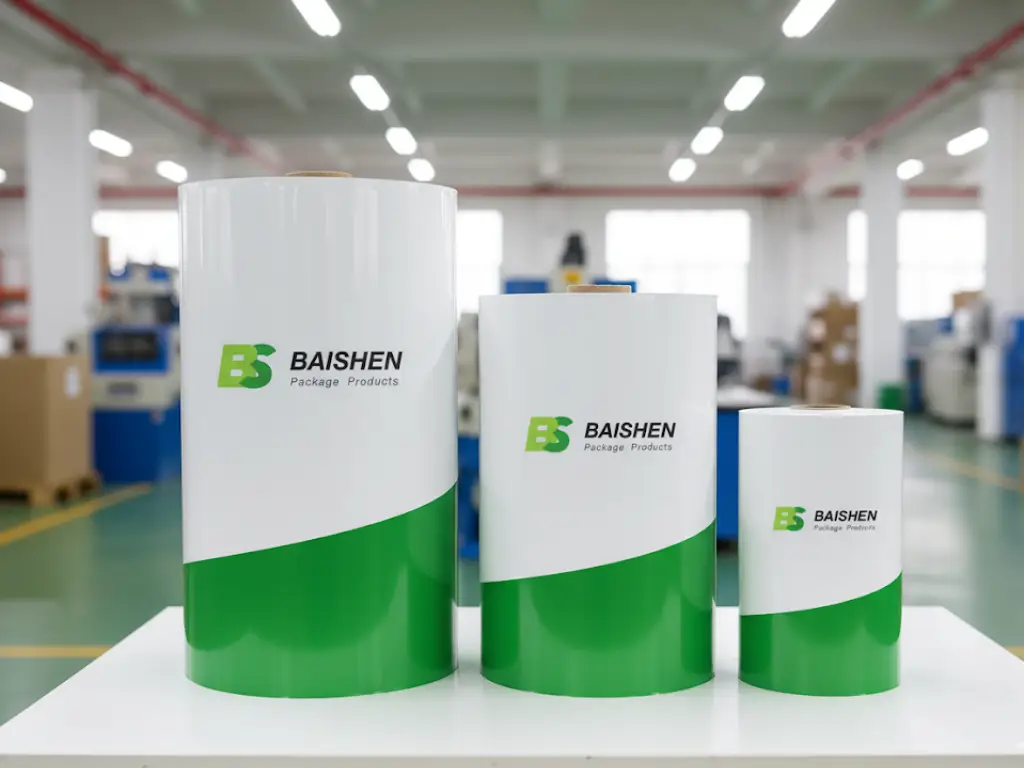
Roll stock, in its simplest form, is a roll of flexible packaging material in the form of a continuous sheet around a central core of cardboard or plastic. This film can be made in one or more layers of polymer, foil, or paper and is commonly pre-printed with high-resolution graphics and branding, and product data.
Roll stock is provided as a large, continuous roll, as opposed to pre-formed pouches or bags, which are ready to be filled. This roll form is specifically designed for use with automated equipment to perform the forming, filling, and closing processes in a single integrated operation. The substance is a highly engineered product to perform to certain criteria of durability, barrier protection, as well as sealability. It is commonly used in high-volume manufacturing of a wide range of industries, as it is the raw material that is transformed into finished packages in real-time on a production line.
How Roll Stock Packaging Works: The Form-Fill-Seal Process
The real role of roll stock is achieved when it is combined with Form-Fill-Seal (FFS) equipment. This is an automated machine that is the driving force behind converting a plain roll of film into a closed and complete product within a single high-speed operation. The efficiency of the process is very high, and it takes place in one of two configurations, usually depending on the product. To fill loose, granular, or liquid products such as coffee grains, snack food, and powder, a Vertical Form-Fill-Seal (VFFS) machine will be used. It is drawn downwards on a forming tube to form a vertical bag, which is then capped at the bottom, loaded at the top with an exact quantity of product, and capped at the top before being cut off. A Horizontal Form-Fill-Seal (HFFS) machine is used on solid, single-item products, like candy bars, baked goods, or sterile medical devices. In this case, the product is transferred to a conveyor, and there the film is attached horizontally around the product, and then the two ends are sealed. The effectiveness of this high-speed, continuous mechanical action all depends on the accurate engineering of the film itself, both in its tensile strength and flexibility, and in its special heat-sealing characteristics.
Types of Materials Used in Roll Stock Film
Rollstock packaging greatly relies on the composition of the material used to make the film. A movie is never a one-dimensional thin plastic; it is usually an elaborate multi-layered laminate that is designed to give it a particular protective property. The first one is to provide barrier protection against external factors that affect the quality of products.
Flexible packaging material may consist of common materials such as:
● Polyethylene (PE): With its high sealing property and flexibility, it is commonly used as the innermost, food-contact layer.
● Polypropylene (PP): It is very transparent, has excellent chemical resistance, and a higher melting point; therefore, it can be used in hot-fill applications.
● Polyester (PET): Has a high level of strength, heat-resistance, and scuff-resistance, widely used as an outer print layer.
● Aluminum Foil (Foil): Provides the ultimate protection against oxygen, moisture, and light, and is therefore necessary when the product needs the longest possible shelf life with the airtight preservation of foods.
● Metallized PET/PP: This is a polymer film that has been covered using a micro-thin layer of aluminum. It is a very nice barrier material, albeit not as absolute as a real foil layer, but with a high-quality metallic look.
All these materials are glued together to form a complex film structure that has the superior properties of each layer, and which makes the final package durable, protective, and attractive.
Key Advantages of Roll Stock Packaging
Such capacity to design desired material structures does not reflect a technical game; directly, it is translated to core gains that are redefining contemporary packaging. The roll stock adoption has significant benefits that have a direct influence on the bottom line of a company and operational efficiency.

● Cost Savings in Large-Scale Production: With large run quantities, roll stock is much less expensive per unit than formed pouches. Raw material cost is cheaper, and the automation minimizes the need for manual labor significantly.
● Faster Packaging Speeds with Automation: Form fill seal machines are capable of working at extremely high rates, making them capable of filling hundreds of packages in a minute. Manual or semi-automatic processes can never achieve such a level of throughput, so businesses can fulfill high demand and scale production effectively.
● Branding and Customization Opportunities: Roll stock can be high-quality rotogravure or flexographic printed throughout the entire surface of the package before the forming process. This offers a smooth screen upon which graphic images of high-impact edges to edges are utilized, thereby maximizing brand presence on store shelves.
● Space and Logistics Efficiency: The size of rolls of film is much smaller than pre-made pouches or rigid containers. Each roll may hold thousands of possible packages in a small fraction of the area and saving big on warehouse and transportation expenses and reducing waste.
● Excellent Product Protection and Shelf Life: By tailoring material layers, one can have precise control of the package environment. With the design of films, which have particular barrier properties, manufacturers will be able to preserve a wide variety of products, especially sensitive food products, and their quality, allowing them to live longer on shelves and maintain their integrity between the factory and the consumer.
Roll Stock vs. Preformed Pouches: Which Should You Choose?
The roll stock or pre-formed pouches are one of the crucial choices of any business. It is one conflicting trade-off between investing in long-term manufacturing efficiency and upfront operational flexibility. The absolute best solution is totally based on your level of production, budget, and the nature of your packaging needs.
To illustrate this choice further, the following is a direct comparison:
| Factor | Roll Stock | Preformed Pouches |
| Best For | High-volume, consistent production runs. | Low-to-medium volume or high product variety. |
| Initial Cost | High. Requires investment in automated FFS machinery. | Low. Can start with simple, less expensive sealers. |
| Per-Package Cost | Lower. Material and labor costs are cheaper at scale. | Higher. Both materials and handling are more costly per bag. |
| Production Speed | Very Fast. A fully automated process enables maximum output. | Slower. Limited by semi-automated or manual filling speeds. |
| Complex Features | Limited. Best suited for simpler bag styles like pillow pouches. | Ideal. Easily accommodates features like zippers, spouts, and hang holes. |
| Storage Space | Efficient. Compact rolls require minimal warehouse space. | Less Efficient. Empty bags are bulky and require more storage room. |
To summarize, roll stock is the better option to scale up production and reduce the long-term costs, hence a good fit with established and high-volume products. Ready-made pouches provide the ease and low entry threshold of new brands, one-off custom projects, and product lines that may have various packaging requirements.
Applications of Roll Stock in Modern Packaging Industries
The fact that rollstock film is versatile means that it can be used with an almost unlimited range of products. Its applications are widespread in most of the flexible packaging markets.
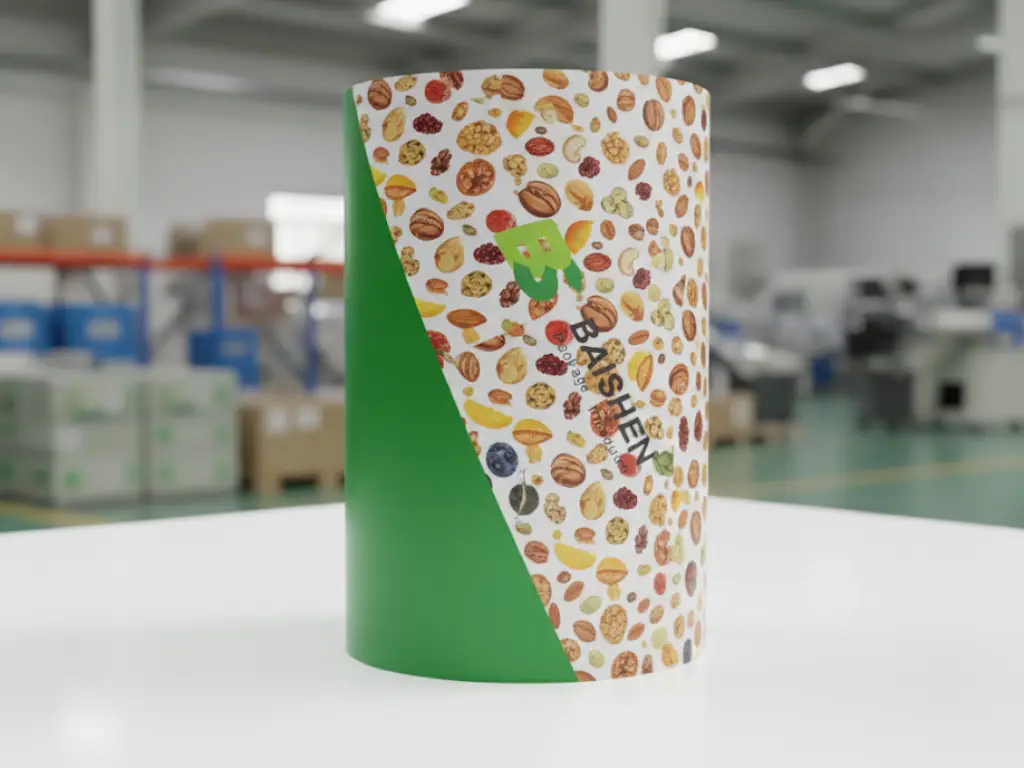
● Food and Beverage: This is the highest roll stock user. The food industry depends on it to produce potato chips and coffee, cheese, and frozen vegetables. This is a very important aspect of its property to keep fresh.
● Pharmaceuticals and Nutraceuticals: Roll stock applies to package pills, powders, and single-dose medicines as it provides a convenient and hygienic form factor, which is precise and measured. Medical equipment is also packed in it.
● Pet Food: Roll stock is usually used to package dry kibble and treats since strong seals and durable film are required to preserve freshness and keep odors in pet food.
● Cosmetics and Personal Care: Small HFFS machines and custom roll stock are commonly used to package single-use samples of lotions, shampoos, and other personal care products.
● Chemicals and Agriculture: Chemical products such as seeds, fertilizers, and detergents are packed in semi-durable puncture-resistant roll stock that is specific to carrying agricultural products and chemical materials safely.
How to Choose the Right Roll Stock for Your Business
The decision to select the appropriate roll stock film may appear to be a complicated one; however, it is a step-by-step process of matching your unique requirements. An effective selection is a balance of three important factors, namely: the requirements of your product, the specifications of your machinery, and the experience of your supplier.
Step 1: Clarify the Core Needs of the Product
It will always start with your product. The main task of the film is protection, i.e., first accommodating the compatibility and safety of the products; the inner layer must be of food grade where food contact occurs, and this must be chemically inert, i.e,. It must not react with the contents. On top of this, you have to determine the required barrier requirements. The required material and the multi-layer structure of the film depend directly on whether it is necessary to block oxygen or moisture, or UV light, to achieve the maximum shelf life.
Step 2: Align with Your Machinery’s Requirements
Then you have to get the film running on your automatic production line. The compatibility of machines cannot be bargained against, or costly downtime due to jamming or bad seals can be incurred. The main technical requirements, including the thickness of the film, width, and coefficient of friction, should be accurately adjusted to your Form-Fill-Seal (FFS) equipment to afford continuous and efficient production without any interruptions.
Step 3: Choose a Professional Supplier Partnership
Lastly, to have the right technical specifications, a powerful supplier relationship is vital. A good supplier is not only a supplier; he is a consultant. They use their knowledge in material science to suggest the best film solution for your product and equipment. They offer high-quality control and excellent technical assistance, and you are going to be guaranteed that each roll of film sent is going to work reliably and predictably within your production. Without this kind of partnership, the result is bound to fail.
Your End-to-End Roll Stock Solution: The Baishen Pack Advantage
You want a partner who is going to allow your products to be safer, quicker to move to the market, and more competitive on the shelf when you are selecting roll stock. Having more than ten years of experience, Baishen Pack offers demonstrable benefits that make your company unique:
● 10+ Years of Experience: Since 2012, we have been involved in flexible packaging with clients in all types of food, beverage, pet food, supplements, as well as personal care industries, providing durable packaging solutions worldwide.
● Certified Quality Assurance: All roll stock is made out of high-barrier food-grade materials, and they are certified by BRC, IS, O, and SGS.
● Fast Turnaround: With digital printing, low MOQs, and fast prototyping are possible, with the production turnaround taking as little as 710 working days.
● Brand-Boosting Design: Custom high-resolution printing, various finishes, and functionality help your products to be visible on busy shelves.
● Sustainable Options: Recyclable, compostable, and PCR roll stock solutions enable your brand to achieve green targets and market demands.
When Baishen Pack is used, you have more than a roll of stock; it is a fully formed, packaged solution to the market. Get in touch with us and get your packaging upgraded.
Sustainability and Eco-Friendly Innovations in Roll Stock
Nowadays, to select the right film is not only a matter of technical and operational specifications, but also of environmental responsibility. The flexible packaging sector is in the process of developing more sustainable packaging solutions to deal with its environmental impact in response to increasing consumer and regulatory pressure. One of the main areas of this innovation is an increase in recyclability. Non-biodegradable multi-layer films are known to be notoriously hard to recycle since their mixed plastics cannot be readily separated. To correct this, the industry is leading in the development of mono-material films, which can be recycled. These high-technology films are based on one polymer, such as polyethylene (PE) or polypropylene (PP), which makes them fully compatible with the current recycling stream, and still allows the required level of barrier properties to preserve the product.
Other than recyclability, there is the source reduction strategy of downgauging with a rollstock packaging machine. Material science today can be used to produce much thinner and lighter films, without sacrificing the strength or durability of the thicker films. The direct benefit of this innovation is that the overall volume of plastic utilized per package is significantly decreased and, as a result, the amount of the raw material and the volume of shipping is minimized.
To add to these initiatives is the increasing consumption of Post-Consumer Recycled (PCR) content. This process uses recycling of plastics used in residential and commercial recycling programmes in the production of new roll stock films. Using PCR content to create a demand for recycled materials will decrease the use of virgin plastics, save energy, and contribute to the creation of a more circular economy of packaging material. All these developments are creating a more sustainable future in the flexible packaging sector.
Frequently Asked Questions About Roll Stock Packaging
Can small businesses use roll stock, or is it only for high-volume production?
Although the cost of initial investment in FFS machinery may be expensive, there are cheaper machines with lower costs. Alternatively, small businesses may collaborate with co-packers (contract packagers) already in possession of the equipment so that they can enjoy the benefits of roll stock without the initial capital outlay.
What is the shelf life of roll stock films?
The film itself has an extremely long shelf life (a year or longer) when kept in the right place and under cool and dark conditions. The shelf life of the product in the film is purely determined by the barrier properties of the film used in packaging and the product in itself, which may last anywhere between many months to several years.
What is the typical lead time to receive custom roll stock film?
Lead times vary based on the supplier and the complexity of the printing. After artwork approval, a typical lead time for custom-printed roll stock can range from 4 to 10 weeks.
Are digital printing options available for short runs?
Yes. One of the newest processes was digital printing, which has turned out to be a game-changer in short runs and multi-SKU projects. It also does not require printing plates, so it can print in high quality at reasonable costs when using smaller quantities that are perfect for market testing or promotional materials.
What certifications should I ask for from a roll stock supplier?
For food packaging, you must verify that your supplier is accredited through a Global Food Safety Initiative (GFSI) scheme, e.g., BRCGS or SQF. This certification shows that they observe the best standards of food safety and quality control.
Conclusion
Roll stock is not only a packaging material, but it is a complete packaging solution that is at the core of efficient manufacturing today. It is an invaluable resource to any company that produces products in large volumes due to its capability of providing high-speed automation, high cost savings, excellent product protection, and extensive branding opportunities.
Although initial investment in machinery would need a considerable amount of consideration, the long-term cost benefits are unmistakable. Learning the principles of roll stock, the FFS process, and the principles of the correct selection of materials, the businesses can make a well-informed choice to open the doors to new ways of productivity and scale. The appropriate film and the appropriate supplier are the initial steps towards making the future packaging operation more efficient and profitable, and secure.