What Are Stand Up Pouches Made Of?
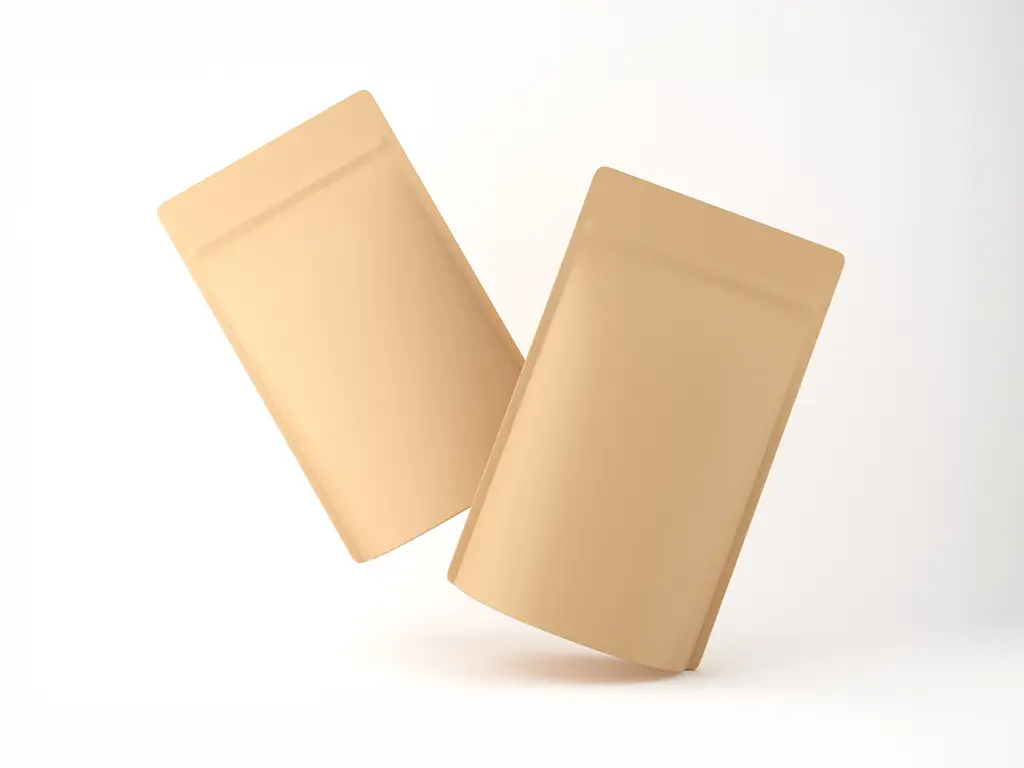
When choosing the right stand up pouch packaging material, think of the pouch holding your coffee beans, your dog’s kibble, or your protein powder. Not a fabric bag or a zipper pouch for cables, but the flexible package that stands upright on a store shelf. That bag is almost never made of one material. It is a laminate: several thin films bonded into a single structure, each doing a job the others cannot.
Three jobs, three layers. The outer layer carries the printing and decides how the pouch feels in hand: glossy, matte, paper-like, or clear. The middle layer is the barrier, and it is where shelf life actually comes from; it blocks oxygen, moisture, and light. The inner layer is the sealant, the food-contact film that heat-seals into a pouch and keeps your product safe.
The way these layers come together explains two things buyers often wonder about. First, why the print never scratches off: during lamination, the printed film gets sandwiched between layers, so the artwork sits protected inside the structure. Second, why the pouch stands at all: films are printed roll to roll, laminated, slit, and then formed into bags with a bottom gusset that creates the base.
It is important to distinguish between shape and material. While various types of stand-up pouches packaging are defined by their bottom structures and closures, the stand up pouch material decides its shelf life, cost, and protective qualities.
Knowing the available materials is the first step. Next, you must determine which structure your product actually needs to survive on the shelf. This guide explores every common material option to help you navigate that decision.
The Material Library, Layer by Layer
Every common film fits into one of the three roles. Understanding them by role, rather than as an alphabet soup of acronyms, makes supplier conversations highly productive.
The Outer Layer: How the Pouch Looks and Prints
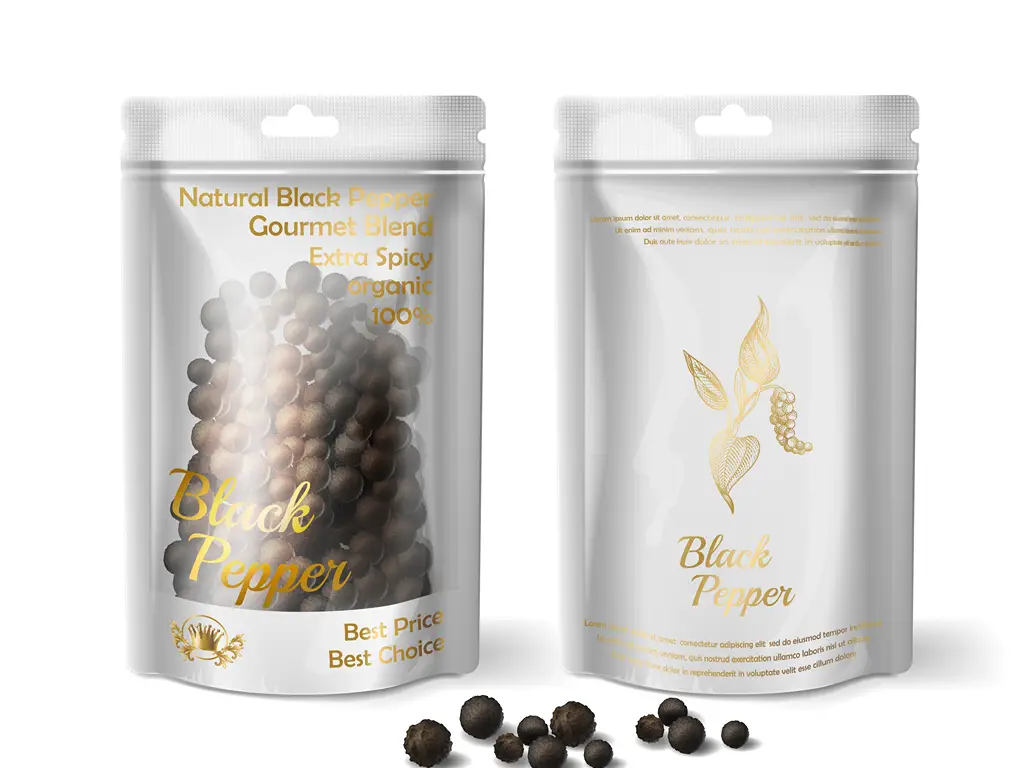
For a standard plastic stand up pouch, PET is the workhorse print web. It takes high-resolution ink well, holds structure, and is the standard choice when artwork carries fine detail. MOPP gives a matte, metallic-sheen surface; it is the film behind most premium-looking matte pouches. Kraft paper outer layers deliver an organic, natural feel that many food and wellness brands want. Clear outer films exist too, when showing the product is the point.
One mistake worth catching early: a kraft or matte exterior says nothing about barrier performance. The rustic paper look sits on the outside; protection still depends on what is laminated behind it. Buyers who order a kraft stand up pouch or paper stand up pouch options without asking about the inner structure sometimes discover their granola going stale weeks early.
The Barrier Layer: Where Shelf Life Is Decided
VMPET, metallized PET, is the mainstream choice: a thin vacuum-deposited aluminum layer on film, delivering strong barrier at moderate cost and that familiar metallic interior look. Aluminum foil is the step up, a near-total block against oxygen, moisture, light, and aroma. EVOH is the transparent alternative, a coating-grade polymer that blocks oxygen while letting shoppers see the product. And some structures carry no dedicated barrier film at all, which is fine for short-run, fast-turn products and not fine for anything that must survive months on a shelf.
Scarcer options round out the map. SiOx or AlOx coated films offer transparent barrier for premium recyclable structures. PA (nylon) films get added when puncture resistance matters more than gas barrier.
The Inner Layer: What Touches Your Product
PE is the default sealant: food-contact safe, heat-sealable, and flexible. CPP appears when the product or process runs hotter or more aggressive, such as certain liquids and retort-adjacent applications. VMCPP, a metallized sealant, adds a little extra barrier on the inside face. LLDPE blends show up in softer, squeezable structures.
| Pouch look | Typical structure | What it signals |
|---|---|---|
| Glossy full-color print | PET / VMPET / PE | The mainstream retail workhorse, balanced cost and shelf life |
| Matte metallic premium | MOPP / VMPET / PE | Premium shelf positioning, soft-touch feel |
| Natural kraft | Kraft paper / VMPET (or foil) / PE | Organic brand story; check the barrier lining, not the paper |
| Clear window or fully clear | PET / EVOH / PE or clear PE structures | Product visibility where barrier needs are moderate |
| Long shelf life, full light block | PET / AL foil / PE | Coffee, infant formula, pharmaceuticals, long logistics chains |
Which Structure for Which Product
Barrier choice should start from one question: what does your product fear? Oxygen stales coffee and rancidifies pet food fats. Moisture softens crispy snacks and cakes protein powder. Light degrades vitamins and colors. A structure is chosen by matching the threat, not by working down from budget, and not by defaulting to whatever the competitor ordered.
Four barrier tiers cover nearly every dry and liquid consumer product. The matrix below maps common product categories to a sensible tier and, just as important, states where each choice stops working.
| Product category | Recommended barrier tier | Where it fails, and what to do |
|---|---|---|
| Whole coffee beans, ground coffee | Foil or high-grade VMPET | VMPET structures lose aroma past ~6 months; upgrade to a foil stand up pouch for long logistics or premium shelf programs |
| Crispy snacks, baked goods | VMPET | Clear/EVOH-only structures shorten crunch life; if transparency is required, shorten best-before and add oxygen absorbers |
| Pet food (dry) | VMPET, foil for large bags | Fat oxidation in kibble punks weak barriers; large-format bags need puncture reinforcement |
| Protein powder, supplements | Foil or EVOH with foil backup | Moisture clumping is the failure; verify seal integrity, since powders find every weak seam |
| Liquids, wet pet food, refills | Spout-capable foil or high-barrier structures | Seal and spout weld are the weak points; drop-test before committing |

Numbers make the tiers concrete. Aluminum foil sits at effectively zero oxygen transmission. Metallized PET typically measures 0.5 to 2 cc/m²/day OTR with similar moisture figures. EVOH can reach 0.005 to 0.1 cc/m²/day under ideal conditions, better than metallized films, but it loses performance in high humidity and therefore lives inside multilayer structures.
There is also a selection factor almost nobody mentions until it costs them: metal detection. Foil blocks standard metal detectors completely, so foil-packed lines generally need X-ray inspection instead. EVOH-based structures pass metal detection untouched. If your co-packer runs inline metal detection, that alone can decide the barrier tier.
The market is moving while you decide. Bioplastic stand-up pouch demand is projected to grow at 10.7% a year through 2030. That is against 8.0% for the stand-up pouch market overall, which reached USD 30.7 billion in 2023. Differentiated structures are not a niche anymore; they are where the growth is concentrating.
The two growth rates, side by side
Annual growth through 2030. Market size, 2023: USD 30.7 billion — Grand View Research.
How to Specify It: RFQ-Ready Language
A structure decision becomes real only when it survives contact with a supplier’s order form. Most first-time buyers describe what they want in adjectives and get back whatever the factory’s default line produces. The cure is a four-step specification process.
Step 1: Start With the Product, Not the Bag
Write down what the product physically is: dry or wet, powder or liquid, sharp-edged or soft, dense or light, and its fill weight. These facts select the inner layer and the thickness before any aesthetic enters the conversation. Sharp-edged pet treats or freeze-dried pieces, for instance, argue for a puncture-resistant layer regardless of what the artwork looks like.
Step 2: Lock the Structure in Writing
Name the structure the way factories read it: outer / barrier / inner, as in PET/VMPET/PE. Then pin the manufacturing parameters, because anything unspecified gets decided on the production floor by default. The details that matter most:
- Total thickness, stated in microns (common pouches run roughly 50 to 150 μm; 100 μm is a typical retail spec)
- Seal widths, typically 7 to 9 mm on side and bottom seals
- Tear notch position, as distance from the top (15 mm is a common reference), not just “tear notch included”
- Zipper spec: standard zippers around 13 mm wide; child-resistant versions around 28 mm, placed roughly 30 to 35 mm from the top
- Extras: rounded corners, degassing valve, window, hang hole, spout
A correctly written spec line looks like this: stand-up pouch, PET/VMPET/PE, 100 μm, matte MOPP outer. Side and bottom seals 7–9 mm; tear notch 15 mm from top; 13 mm zipper 30–35 mm from top; rounded corners. Every number in that line prevents a specific misunderstanding.
Step 3: Match the Print Method to Your Run
Digital and gravure printing are different economic machines, and the right answer depends on how many SKUs you run at what volumes. Digital printing charges no cylinder or plate fees and handles unlimited colors with multiple SKUs in one run. Minimums sit in the low hundreds of units, with typical turnaround of 7 to 10 business days. Gravure charges one plate per color, needs 5,000 to 10,000 units to make sense, and runs 23 to 25 days. A brand testing flavors or selling through multiple SKUs usually bleeds money on gravure tooling; a single artwork at high volume usually wins on gravure unit economics.
Step 4: Send It and Audit the Quote
When quotes come back, check them line by line against your spec, because the deviations hide in the details a buyer did not write down. The checklist below covers what a complete pouch RFQ contains.
The 12-point RFQ checklist
- 1. Product profile: contents, fill weight, dry/wet/powder, sharp edges
- 2. Structure written as outer/barrier/inner
- 3. Total thickness in microns
- 4. Seal widths and seal type
- 5. Tear notch distance from top
- 6. Zipper type and width, position from top
- 7. Print method, number of colors, number of SKUs
- 8. Finish: matte, gloss, metallic, paper feel
- 9. Functional extras: valve, window, spout, hang hole
- 10. MOQ and unit price per quantity break
- 11. Lead time quoted in business days
- 12. Food-contact compliance documentation requested
How Structures Fail—and the Recyclable Truth
Failures in flexible packaging rarely look dramatic. They look like a best-before date that arrived early, which is exactly why they are worth studying before ordering.
Oxygen and moisture failures show up as stale coffee, soft crackers, and clumped powder. The root cause is usually a barrier tier chosen one level too low for the real shelf life; solving it means upgrading the middle layer, not thickening the bag. Puncture failures trace to sharp or dense contents working against a thin structure; a PA layer or added thickness solves what a complaint email cannot. Seal and zipper failures, openings that wander or zippers that split, come back to unspecified parameters; this is why the seal widths and zipper specs in the previous section exist.
Then there is the failure of expectations. Most multi-material laminates, the very structures that give pouches their shelf life, cannot be processed in standard thin-film recycling streams. A pouch can be lightweight and resource-efficient and still not recyclable in your customers’ curbside bin. Brands that discover this after printing ten thousand units have learned it the expensive way.
Recyclable stand-up pouches do exist and are scaling, but they deserve a buyer’s scrutiny rather than a buyer’s hope. Major producers have moved from concept to commercial launches. In August 2023, Mondi partnered with Europe’s largest pet retailer Fressnapf on a mono-material polypropylene recyclable pouch for dry pet food. Berry Global introduced food-grade films with at least 30% post-consumer recycled content the following month. Amcor and Stonyfield Organic launched a recyclable spouted yogurt pouch in February 2024. The practical move is to ask any supplier for the structure in writing: mono-PE, mono-PP, or PCR content. Run shelf-life testing before switching a barrier-sensitive product to a recyclable structure. High-barrier products with long shelf-life demands are precisely where recyclable options may not yet hold up.
Baishen Pack puts structures in writing — send your product profile and target shelf life, and get a laminate spec back with your quote.
What This Means for Your Assortment
Everything above reads differently from the sell side of the counter. For a distributor or wholesaler, the layer-by-layer logic is not purchasing hygiene, it is inventory strategy, and it sorts cleanly into three tiers.
The Volume Tier
General-purpose structures, clear and metallized, are where standard inquiries land. Plastic materials held about 55% of stand-up pouch market revenue in 2023, and this is the tier every competitor can quote from a catalog. It pays to stock it, because it wins the first conversation. It does not pay to compete only here, because catalog items get compared on price and nothing else.
The Margin Tier
High-barrier foil builds, child-resistant structures, and recyclable mono-material pouches are where engineering value turns into pricing power. A buyer can compare two commodity metallized pouches line by line, but nobody price-shops a structure that solves oxygen, compliance, and recyclability in one spec. This is also where category knowledge pays. Coffee and long-logistics pet food justify foil; supplements justify seal-intensive powder specs. And the growth numbers already point here, with differentiated structures growing at 10.7% against the market’s 8.0%.
The Trial Tier
Differentiated SKUs used to be expensive bets, because tooling and minimums forced distributors to commit before knowing whether their downstream buyers would follow. Low-minimum digital printing changed that arithmetic. Trial orders in the low hundreds of units, with no plate fees and turnaround around 7 to 10 business days, make it routine to test one differentiated SKU per quarter. Reorder data then decides what earns warehouse space.
Stock the shelf in three tiers
Baishen Pack works exactly this way for packaging distributors and brands. Our custom stand up pouch structures span the full material library, from foil-barrier builds to recyclable options, with zippers, valves, spouts and finishes configured to spec. We quote digitally printed trials from the low hundreds of units, with turnaround around 7 to 10 business days. That makes it routine to test a structure against real shelf data before it becomes an inventory commitment.
The structures in this guide are the vocabulary; the assortment decision is the sentence. If you are weighing which structures fit your product or your catalog, Baishen Pack’s team will compare the options against your product’s needs.
Get Your Stand-Up Pouch Structure Quoted
Send your product profile, target shelf life and quantity — Baishen Pack replies with a laminated structure, thickness and print method, digitally printed from the low hundreds of units.
Request a QuoteReferences
- Grand View Research. “Stand-Up Pouches Market Size, Share & Industry Growth Report, 2030.” 2024.