
Introduction
The choice of proper packaging is a vital factor in preservation, protecting, and selling a product in the market. Mylar pouches are among the most outstanding materials that can be used as flexible packaging because of their high barrier properties and structural integrity. Nevertheless, its performance is essentially connected to a critical variable, which is the size of the Mylar bag. The size of the Mylar bag is not something to guess but rather a calculated choice that affects the long shelf life, the safety of the product, and efficiency.
This paper is a comprehensive guide to different sizes of Mylar bags in terms of their material origin to their practical uses. We shall discuss a clear Mylar bag size chart, explain what each size is used for, and provide a clear procedure for the Mylar bag that best suits your requirements.
What Are Mylar Bags?
A Mylar bag is made out of a film technically referred to as biaxial-oriented polyethylene terephthalate or BoPET. Mylar is a brand name of DuPont Teijin Films, yet in this case, it has turned into a genericized trademark of this particular polyester film. PET film is stretched in two directions perpendicular to each other (so-called oriented), which is a method that has a strong impact on tensile strength, chemical stability, and dimensional rigidity.
The nature of BoPET as a material would suit long-term storage and performance packaging perfectly. Its major peculiarities are:
- ● Exceptional Barrier Properties: Mylar film is very impermeable to gas, moisture, as well as light. This actually inhibits the penetration of environmental conditions such as oxygen, humidity, and UV lights, which are the main culprits in degradation, oxidation, and proliferation of microorganisms- even in small packages such as an eighth of an ounce or quarter size.
- ● High Tensile Strength: Impressive puncture and tear resistance is endowed to the orientation process, which prevents physical damage to contents during handling, transportation, and storage, and minimizes the risks of damage.
- ● Chemical Inertness: The material is non-reactive and does not leach chemicals, and hence is safe to have direct contact with food, pharmaceuticals, and other sensitive products in the food industry.
All these properties interact to produce a stable microenvironment in the bag, thereby isolating its contents and maintaining their quality, potency, and safety over long periods of time.

Why Does Mylar Bag Size Matter?
The size of Mylar bags is directly proportional to performance based on the weight of your items. The size of a bag is a matter of concern since a bag that is too small or too large may end up rendering the bag useless in its purpose.
The main effect is on the quantity of the residual air, or oxygen, remaining trapped in the closed package. An oversized bag will have surplus space, which confines more oxygen. Although this is mitigated by using oxygen absorbers, they have a limit. Limiting the initial oxygen supply with the right size Mylar bag assures optimal operation of the absorbers to create an almost zero oxygen atmosphere, which is essential to extended shelf life.
A too-small bag, on the other hand, exerts mechanical force on the seams and the film itself. This may result in the breakdown of the seals or a puncture, and a break in the protective casing. In the case of commercial goods, presentation also needs proper sizing; a fit package will look professional and will take as much shelf and shipping area as possible, waste will be minimized and costs will be saved, and the appearance and additional functionality of your packaging will be much more professional.
The dimensions of a Mylar bag are directly correlated with its performance. An improperly sized bag can compromise the very protection it is intended to provide. For more information on selecting the right Mylar bag for food storage and long-term preservation, check out our Ultimate Mylar Bag Food Storage Chart.
Mylar Bag Size Chart (Quick Reference)
This chart is a detailed guide, and it is grouped via the usual product weights. The size of any bag is actually subject to the product being packed in terms of density and shape. An example is that a pound of items such as rice will take less space than one ounce of items such as flour. It is also advisable to have a trial with your product in the form of sample-sized bags, to know your precise size before you can place an order for a large quantity.
| Product Weight | Bag Size (Inches) | Approx. Capacity | Common Uses |
| 1 Gram | 3 × 4 | Sample size | Seeds, spices, herbs, small samples |
| 3.5 Grams (1/8 oz) | 3.5 × 5 | Small portion | Coffee samples, cannabis, dried herbs |
| 7 Grams (1/4 oz) | 4 × 6 | ~¼ cup | Spices, tea, snacks, supplements |
| 14 Grams (1/2 oz) | 5 × 8 | ~½ cup | Dried fruits, jerky, nuts |
| 28 Grams (1 oz) | 6 × 9 | ~1 cup | Coffee, tea, snacks, cosmetics |
| 1/4 Pound (~113g) | 8 × 10 | ~2 cups | Rice, flour, grains, pasta |
| 1/2 Pound (~227g) | 10 × 12 | ~1 quart | Powdered food, cereals, coffee beans |
| 1 Pound (~454g) | 13 × 15 | ~2 quarts | Larger food portions, pet food |
| 2–3 Pounds | 16 × 20 | 1–1.5 gallons | Rice, flour, beans, oats |
| 5 Pounds | 18 × 24 | 2–3 gallons | Emergency food storage, grains |
| 10 Pounds | 20 × 30 | 4–5 gallons | Bulk flour, rice, pasta |
| 20–25 Pounds | 24 × 36 | 5–10 gallons | Long-term storage buckets, bulk dry foods |
Types of Mylar Bag Sizes and Their Uses
Mylar bags have a utility that is achieved with a strategic classification of sizes that each has been designed to handle different packaging problems in a spectrum of applications, ranging from petite packages to the strong, massive demands of industrial logistics and long-term strategic reserves. This evolution goes up to the exactness of small-volume goods. Awareness of this spectrum is the key to the maximum protective potential of the material.
Small Sizes (2×3 to 6×9 inches)
At the micro-packaging level, small-sized bags are designed for applications that require accuracy and the maintenance of unit integrity. They come in grams and single ounces, ensuring that an ounce of goodness fits perfectly for high-performance to low-volume and high-value contents. This renders them the benchmark when it comes to the operations where the potency is crucial, the sample viability is crucial, and the resistance to the environmental contaminants is crucial.
- ● Applications: R&D sampler, pharmaceutical APIs (Active Pharmaceutical Ingredients), high-value botanical seeds, single-serving nutritional supplement, and to prevent moisture and electrostatic discharge of delicate electronic micro-components.
Medium Sizes (8×10 to 10×12 inches)
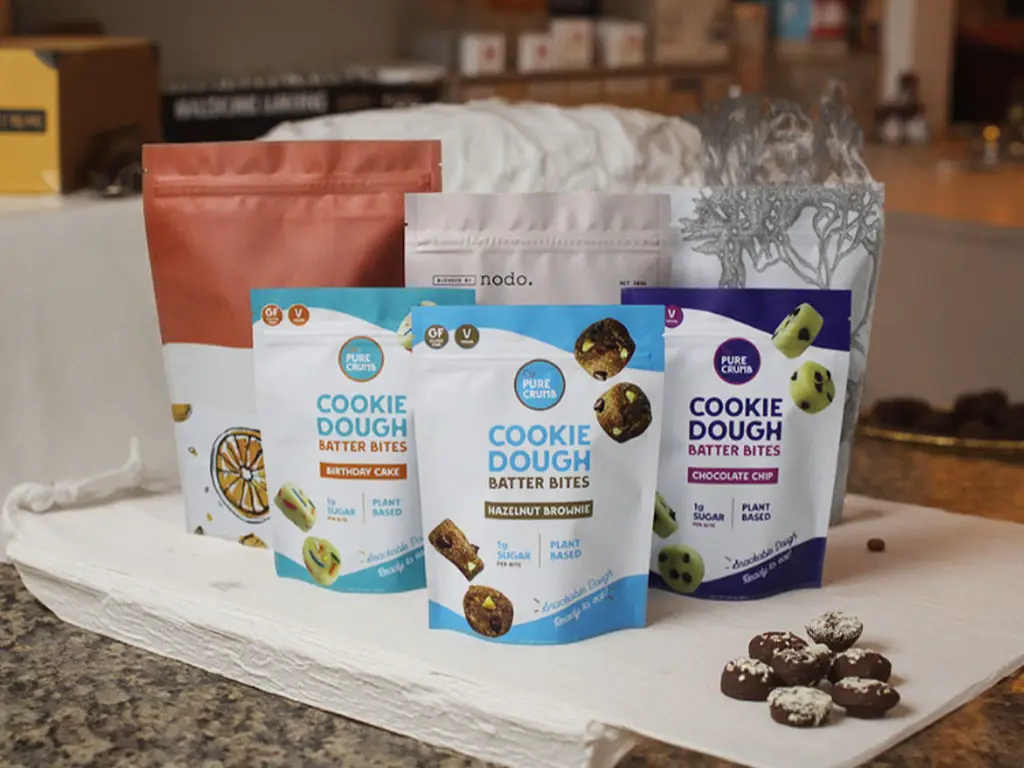
The medium-sized Mylar bags, which bridge the gap between the unit sampling and bulk quantities packaging, are the foundation stone of consumer retail packaging. The category is optimized to balance the volume of products, shelf space, and convenience to the consumers, and typically fits half-pound to 1.5 pounds. The design emphasis is changed to multi-use convenience and point-of-sale attractiveness without compromising the properties of core preservation on the material.
- ● Applications: Retail packaging of high-quality coffee and tea products, fancy snacks, organic dried fruits, jerky, and cosmetic powder. They are also strong and can be used to store less household dry goods.
Large Sizes (12×16 to 20×24 inches)
This category represents the shift of direct consumption of retail food to bulk storage and food preservation. These bags, which have been engineered based on their capacity in pounds and gallons, the 10×14 inch bag is the standardized capacity of the industry when it comes to a 1-gallon volume, and is the basic building block in food security planning and supply chains. They are meant to ensure that staple commodities would be viable in the long term due to the existence of an unbreachable barrier against spoilage determinants.
- ● Applications: It is mainly used in storing multi-year supplies of staple foods such as rice, wheat berries, pasta, beans, and oats. They are also part of assembling the multi-serving emergency meal packages and also in the packaging of wholesale food products.
Extra-Large Sizes (24×36 inches and above)
The large bags are positioned at the end of the sizing scale, used in the extra-large applications where the volume and its logistical effectiveness are the most important factors. They are also known as bucket liners and have been specially designed to fit typical 5 or 6-gallon HDPE buckets. This develops a two-barrier system: Mylar bag gives the bag the much-needed oxygen and moisture barrier, and the rigid bucket withstands pests, light, and physical damage.
- ● Applications: The ultimate answer to large-scale family or community food emergency stocks, long-term storage of agricultural seed stock, and industrial applications that demand inert and protective liners for bulk materials.
Custom Mylar Bags: When Standard Sizes Aren’t Enough
General needs are filled with standard-size Mylar bags, but products are hardly standard. A one-size-fits-all solution is a liability when you are putting together something with special density, shape, or retail positioning. Custom Mylar bags do not simply enhance barrier performance, but they also provide a polished, professional look that opens the marketing potential. They are useful in cutting on oxygen exposure and maximizing branding space, enhancing shelf presence with customized formats, and enabling fine placement of zippers, windows, or spouts to allow more interaction with consumers. In particular, with multi-SKU portfolios, limited editions, or brand-first DTC-competitive, custom packaging is a strategic rather than functional differentiator.
However, a lot of brands are afraid to go custom, not because it does not offer value, but because of old production barriers. The traditional printing process requires high MOQ, plate charges, and lead times, prompting rapid innovation to be unsafe and costly. This is where Baishen Pack does not follow the rules. Our 10 years of experience and vertical supply chain allow us to combine industrial-grade digital printing and food-grade certified material (SGS, ISO, BRC) to produce low-volume plate-free high-quality custom Mylar bags within 7-10 days. When you scale, we usefully transfer you to flexo or gravure–same partner, same quality, no workflow variance.
Better than a barrier performance to visual precision, Baishen makes your packaging work harder, on behalf of your product, your brand, and your growth. When you are willing to design a custom mylar bag size that really fits your image and your market, get in touch with our team today. Let’s build it better.
Mylar Bag Thickness Guide
Mylar film is measured by its thickness in “mils” with 1 mil being 1,000th of an inch (0.001). Thickness is a primary factor in the bag’s durability.
| Thickness | Microns (approx.) | Best For | Storage Duration | Notes |
| 3 mil (76 µm) | Thin, lightweight | Short-term storage, non-food items, samples | Days to weeks | Flexible but not ideal for long-term food storage |
| 4 mil (101 µm) | Medium | Sugar, salt, flour, dried snacks | 1–2 years | Most common entry-level food storage thickness |
| 5 mil (127 µm) | Sturdy | Coffee beans, cereals, dried fruit | 2–5 years | Good balance of durability and flexibility |
| 6 mil (152 µm) | Heavy-duty | Rice, beans, grains, pasta | 5–10 years | Provides stronger puncture resistance |
| 7 mil (178 µm) | Extra heavy-duty | Jerky, granola, nuts, emergency rations | 10–20+ years | Popular for long-term preppers and survival storage |
| 10–12 mil (250–300 µm) | Industrial grade | Bulk foods, high-risk environments | 20–25+ years | Maximum protection, often used for buckets or industrial packaging |
How to Choose the Right Mylar Bag Size for Your Product
The process of choosing the best Mylar bag is factual. This simple four-step process will assist in your estimation of an effective, precise packaging selection.
- ● Step 1: Analyze Product Attributes
Start by examining your product in terms of its major physical characteristics. Its greatest is bulk density–a pound of dense wheat will occupy a long way less space than a pound of light powder. Its shape (solid, powder, liquid) and contour also matter, as do any sharp edges found on objects such as pasta, which may damage its bag and cause punctures with a large, bulky bag.
- ● Step 2: Perform Volumetric Measurement
Then, make accurate measurements. Although weight is a factor, it is the volume that dictates the right bag size. Measure the volume of one portion using such tools as measuring cups. This physical sample will be used to fit into various bags as a test sample.
- ● Step 3: Correlate Data and Validate Fit
Take the size of your sample and locate the possible bag in the sizing chart. Select a size that gives a tight fit without leaving the headspace at the top excessively large (1-2 inches), which is imperative to attain a good heat seal. Never order a bulk of your product without physically confirming your selection by testing your product in real sample bags.
- ● Step 4: Assess the Use-Case Environment
Lastly, look at the whole environment of the use case. Consider the requirements of shipping and handling, which can necessitate a heavier film. In the case of retail, a gusseted bottom may be required to make shelves stable. Also, take into account the end-user experience, i.e., the necessity to have a ziplock in order to reuse it or to have enough space to brand it.
FAQ: Mylar Bag Size Chart
What size Mylar bag holds 1 pound of rice?
One 1-quart bag (which is about 8×12 inches) of rice can hold 1 to 1.5 pounds of rice. A 1-gallon bag (10×14 inches) is also a good and widely used option to store slightly larger amounts, as it is much easier to seal and has enough space.
Can Mylar bags be reused?
Although technically it can be performed with very careful opening below the original seal, it is not generally advised to be important in long-term storage under critical conditions. Whenever a bag is opened up and resealed, the capacity of its use is reduced, and the new seal might not be as valid as the original seal used at the factory.
Do thicker bags always last longer?
Heavy bags provide high quality and resistance against punctures and light penetration, which leads to durability. The final shelf life of what is inside is, however, influenced more by the quality of the seal and the complete elimination of oxygen. A 5 mil bag that is perfectly sealed will be better than a poorly sealed 7 mil bag.
How do you measure Mylar bag capacity?
Capacity is quantified in two units: firstly, once full of liquid (i.e., by fluid volume, e.g., a quart or gallon), and secondly, by the mass of a given, standardized amount of some product (e.g., the quantity of rice or wheat it can hold). Volume is also a more reliable measure of comparison, as the densities of the products differ.
Conclusion
Mylar is a high-performance packaging material, the utility of which is well established. Sizing principles, however, require proper application, which will determine whether it will be able to achieve its full potential. The correct size of the bag and thickness which is desired thickness should be chosen in a systematic manner, that is, by taking into consideration the product volume, density, storage conditions, and the required shelf life. A correctly selected Mylar bag is the basis upon which integrity and preservation of products will be achieved, whether they are intended to be packaged for commercial use or long term storage by the user.