Mylar Bag Printing: Methods, Costs, and How to Choose the Right Route for Your Volume
You have the product sorted. Recipes tested, compliance handled. Then packaging stalls everything. That is the exact moment thousands of food, coffee, and supplement brands type “mylar bag printing” into Google and land in a swamp. Equipment vendors sell printers, wholesale sites sell bags, and almost nobody explains how the routes actually compare on cost. This guide closes that gap. By the end, you will know which printing method fits your volume, what drives the quote, and how to skip the most expensive mistakes.
Why Your Home Printer Fails on Mylar (And What Professional Printers Do Differently)
If you have ever fed a shiny mylar pouch through a desktop inkjet, you already know the first hard truth: it does not work. The ink beads, smears, or dries to a film that flakes off under a fingernail. The failure is not your printer. It is physics.
Reason one is surface energy. Polyester films like mylar arrive with a surface energy around 30 dynes/cm, which is too slick for most inks to anchor to. Professional converters fix this with corona treatment, an electrical discharge that oxidizes the film surface. It lifts the film into the 38–42 dynes/cm range printers need (ASTM International D2578, 2017; the standard test method for wetting tension of PE and PP films). No corona, no adhesion.
Reason two is flex. A pouch gets squeezed, folded, and dropped a hundred times between factory and pantry. Production inks are formulated to stretch with the film; home inks cure rigid and crack at the first crease.
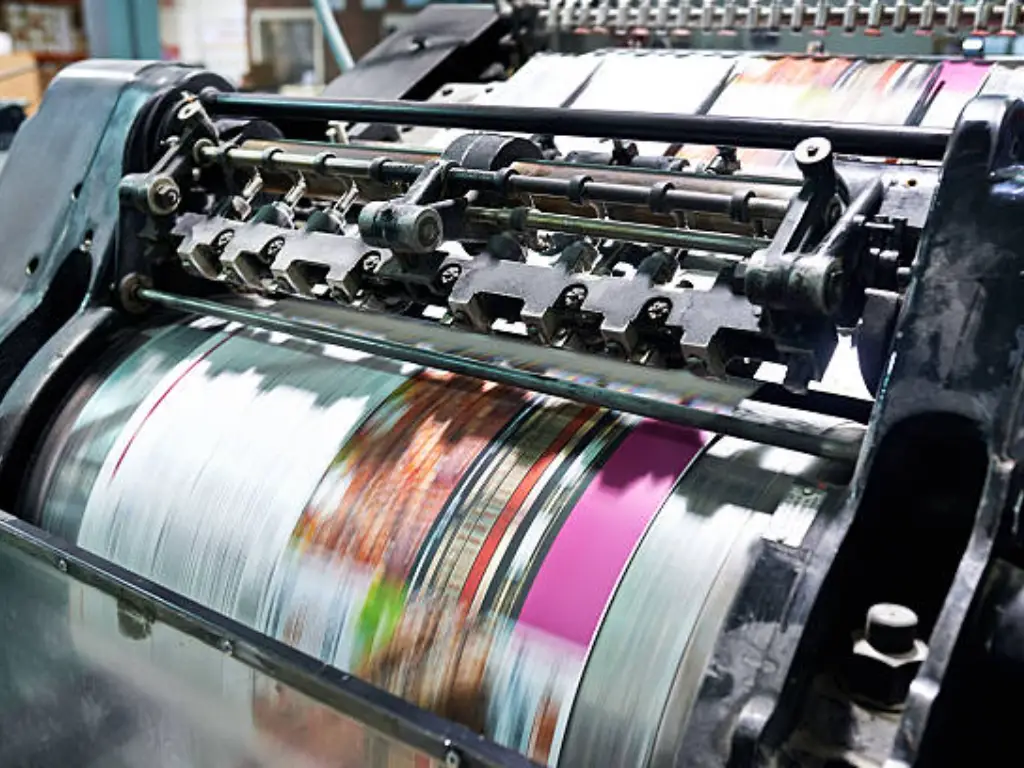
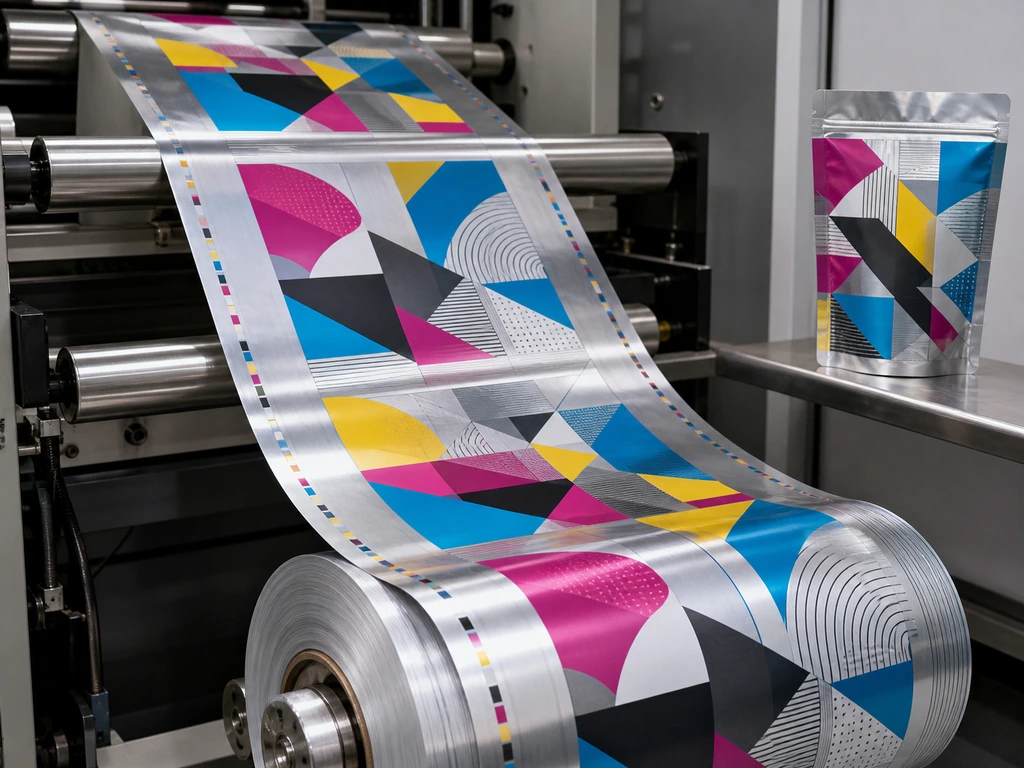
Reason three is the one that reorders everything: professional printing happens before the bag exists. Converters print giant rolls of film, roll stock film, on web presses, then laminate, slit, and form the pouches. Printing a finished bag is working backwards, which is why direct-on-bag equipment is a niche tool for tiny runs. And if you want bright graphics on black or metallic film, add a wrinkle we will meet again at the quote stage: white ink has to be laid down first.
Every Printing Method for Mylar Bags, Compared
Before you compare methods, take three measurements. Your order size: hundreds, thousands, or tens of thousands of bags? Your color count: a one-color logo or photo-quality art? Your budget: can it carry a one-time plate fee? With those three numbers in hand, the table makes sense.
| Method | Setup Cost | Best Volume | Strengths | Watch-Outs |
|---|---|---|---|---|
| Digital (HP Indigo class) | No plates | Hundreds to tens of thousands | Full-color, fast turnaround, low MOQ | Higher per-unit cost on very long runs |
| Flexography | Plate fees (hundreds to low thousands) | 50,000+ | Lowest per-unit cost on long runs | Inflexible for design changes |
| Rotogravure | Engraved cylinders (highest setup) | 100,000+ | Richest detail and brand-color matching | Only economical at scale |
| Screen | One screen per color | Under 1,000 | Thick opaque ink, bold flat colors | Slow; multi-color costs climb |
| UV flatbed & white-toner | $15K–40K equipment | Sample runs, short promos | Prints finished bags directly | About 10 bags per 12 minutes |
| Heat transfer | Low | DIY test batches | No equipment beyond a heat press | Limited durability |
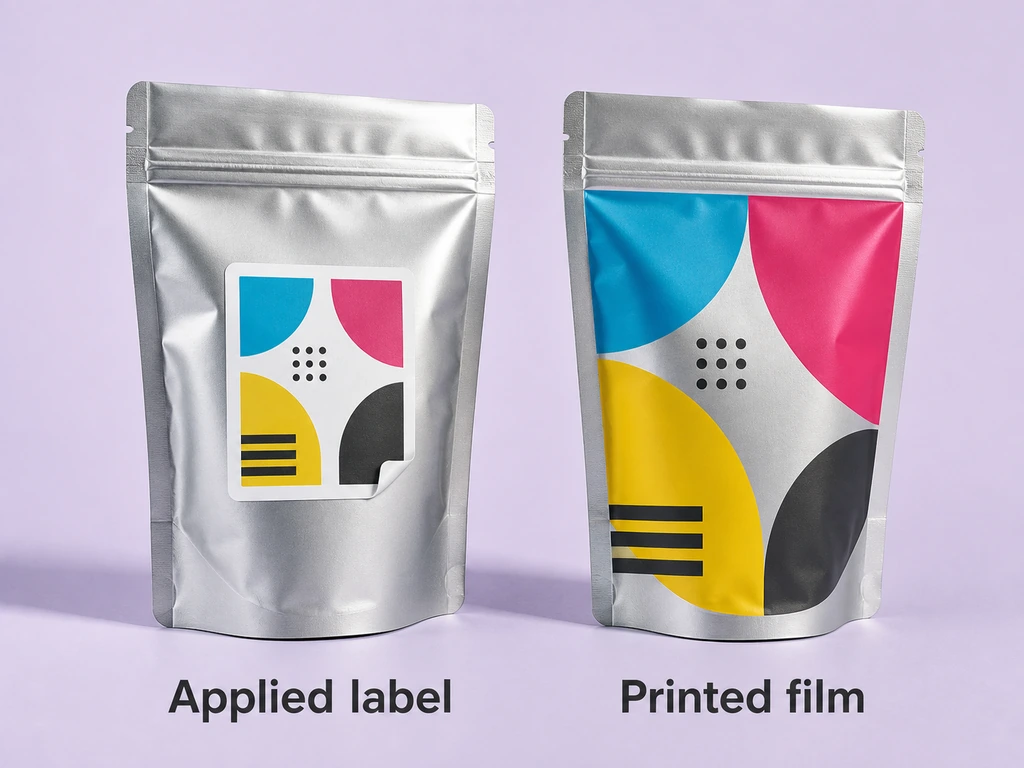
| Labels | None | Under ~100–500 | Fastest, zero setup | Edge lift and wear at creases |
The easiest trap is treating any of these as a one-size answer. Labels solve week one, not year two. Gravure is magnificent, and pointless below six figures of volume. And substrate matters before method. A kraft paper pouch soaks ink into the fiber and prints beautifully in matte tones, while metallized film demands white underprinting and a different ink system entirely. (The Flexographic Technical Association publishes flexo ink and substrate matching guidance.) Choose the film first; the method follows the film.
DIY, Labels, or Factory: The Three Real Routes to Printed Mylar Bags
Once you see the method list, the question is not “which method?” but “who prints?” Three routes exist, and each is judged by three numbers. Cost per bag. Durability through shipping and repeated opening. And how seamlessly the print looks like it was born on the bag.
The Home-DIY Reality: What Actually Works (And What Never Will)
The honest answer is that almost nothing consumer-grade works. Desktop inkjets and lasers either jam the pouch or lay down ink that scratches off with a fingernail. What does work: white-toner printers like the OKI Pro9542 fitted with an envelope fuser, or small flatbed UV machines running flexible inks. That gear runs $15,000–40,000 new and prints perhaps 10 bags every 12 minutes. It exists for one job: prototypes and runs of a few dozen. Run the math against a cheap label job and the machine only wins if you need dozens of one-off samples every week. Most brands do not.
The Label Route: Fast, Cheap, and Honest About Its Limits
Labels are the route the commercial printing community quietly recommends for small batches. As one printer put it, “a sticker is the way to go.” A well-run label job can even wrap the entire face of the pouch, zipper line included, and look printed at arm’s length, at roughly a third to half the cost of direct printing. The limits are just as honest: edges lift after repeated opening, creases near the zipper wear first, and heavy products punish adhesive. One seller packaging soil asked exactly the right question: “will the sticker eventually come off?” For bulky, grainy, or repeatedly opened products, the answer is eventually yes. That is why labels are a launch tool, not a brand’s final packaging.
Short-Run Digital Printing: The Middle Path Most Small Brands Miss
The route most small brands miss entirely is factory digital printing. HP Indigo-class web presses print without plates or cylinders and hit up to 97% of the Pantone range (HP, 2024). They deliver finished pouches in as little as 7–15 business days, most commonly stand-up pouches printed full-face on front, back, and bottom panel. Around the 500-bag mark, per-unit cost starts beating the label-plus-labor route while delivering genuine printed-on-film quality. At the other end, somewhere past tens of thousands of bags, flexo’s plate economics take over. Digital printing owns the space between, which happens to be where most growing brands live.
Choosing a Printing Method by Volume: The Routing Table Most Buyers Skip
That boundary is worth turning into a map. Volume is the variable that decides everything, yet almost no guide connects order size to route. Here is the routing table:
| Volume Band | Best Route | Cost Logic | Typical Turnaround |
|---|---|---|---|
| Under 100 bags | Labels | Lowest cash outlay; adhesive plus labor | Days |
| 100–500 | Labels or first digital run | Digital per-unit still high below ~500 | Days (digital 7–15) |
| 500–5,000 | Digital printing | No plate fees; full color | 7–15 business days |
| 5,000–50,000 | Digital, with flexo worth quoting | Flexo amortizes at higher volume | 7–15 business days |
| 50,000+ | Flexo or rotogravure | Plate costs spread thin; lowest per-unit | Weeks, including plate making |
The expensive mistakes live at the jumps between bands. Order 500 bags on flexo and the plate fee alone can exceed the bags. Keep running 50,000 on digital and you leave the entire point of volume on the table. If your growth curve passes through several bands in a year, and most snack and supplement launches do, plan for a supplier relationship that can move with you, rather than one that punishes every jump.
What Actually Drives the Quote: MOQ, Plates, White Ink, and File Prep
Every line on a mylar bag quote traces back to a real production action. Understanding the three big ones turns “is this supplier overcharging me?” into “do I actually need this line item?”
Setup Costs: Plates, Cylinders, and Why “No MOQ” Isn’t Free
Plates and cylinders are the packaging world’s cake molds: paid once, amortized over the run. Flexo plate sets run from hundreds to low thousands of dollars; rotogravure cylinders cost far more, engraved per color. Digital printing has none of it, which is why “no MOQ” is never actually free. A low-minimum digital order carries a higher per-unit price because setup, ink, and press time compress into fewer bags. When a supplier turns away a 200-bag flexo order, that is not arrogance: the plate cost can exceed the order value. The fair way to read a quote: at small volume, you pay for flexibility; at large volume, you prepay for economy.
Material and Finish Premiums: Why Black, Metallic, and Matte Cost More
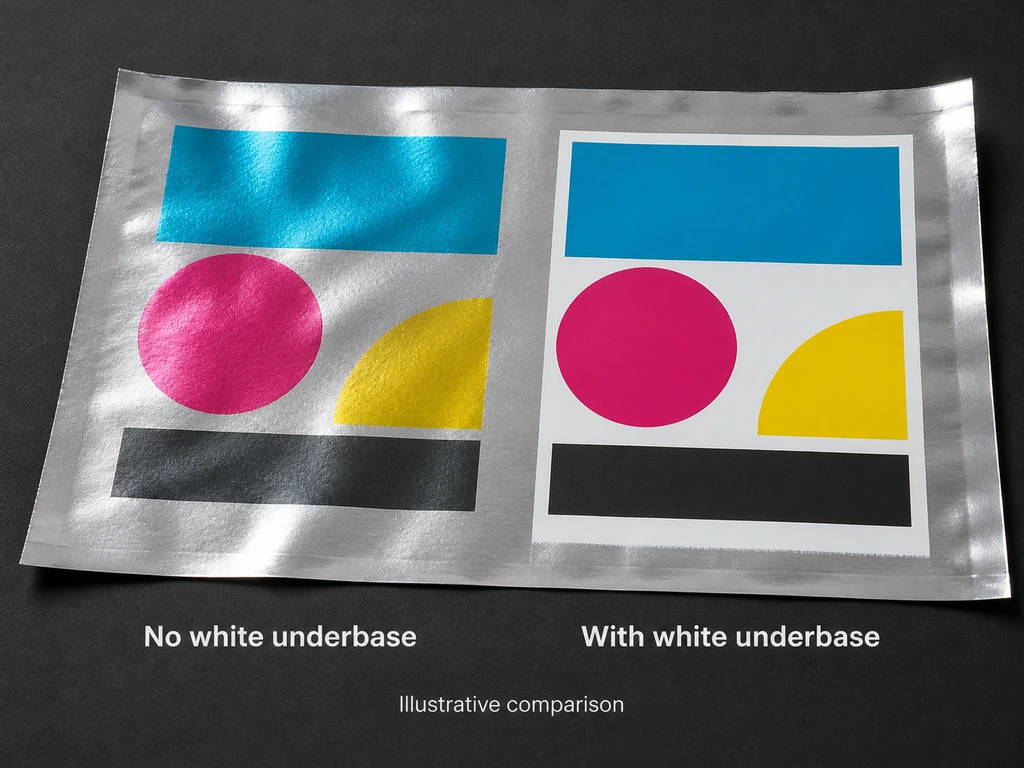
Black, metallic, and matte all carry premiums, and each traces to a physical step. Bright artwork on dark or metallized film requires a white ink underbase, an entire extra print pass that adds directly to cost. Metallized film itself runs roughly 10–30% above clear structures. Soft-touch lamination is priced by surface area. None of these are markups for their own sake; each is a machine action you can point to. The strategic question is where the premium pays rent: a soft-touch matte bag sells a premium coffee or skincare line on the shelf, and does almost nothing for a commodity bulk item photographed flat for an online listing.
File Prep and Proofing: The Two Things That Decide Turnaround
Turnaround is decided before production starts, by two documents: your artwork file and your proof sign-off. The file rules are passport-photo simple. Vector formats (AI, EPS, SVG) for logos and text, so they stay razor sharp at any size. Raster images at 300 DPI minimum at actual print size. Pantone references instead of screen-picked CMYK for brand colors. Then comes the proof cycle, and here digital changed the timeline: a digital proof can land within 24 hours, against weeks for traditional sample bags. Most multi-week delays are not production problems. They are three rounds of “text wasn’t outlined” and “image was 72 DPI.”
Suppliers who take this step seriously shorten it further. BS Flex Pack prepares 24-hour digital proofs from approved artwork, offers free stock samples and custom sample bags before you commit to production, and pairs each order with a dedicated sales specialist who checks file specs against print requirements. If your artwork files have bounced between converters before, this is the step where that stops.
What Mylar Bag Printing Really Means for Your Business
File quality and proof speed decide turnaround, and turnaround is where packaging stalls businesses. Think back to the failure points this guide has walked through. The founder who bought a desktop printer and watched ink flake off. The seller wrapping pouches in labels and wondering how long the edges will hold. The brand that finally found factory digital printing and discovered its quote anxiety had a name: plate fees it did not need to pay. Those are not isolated anecdotes. They are the market’s structure in miniature.
Buyers at small volume optimize for cash outlay and speed, then get burned on durability. Buyers at scale optimize for unit cost and get locked into rigid setups. And almost nobody knows, before searching, that printing happens on the roll rather than the bag, or that white ink is a separate cost line, which is precisely where price gaps and supplier confusion breed. Read backwards, each frustration marks a business opening: labels are a legitimate launch-stage product, digital printing is the engine that carries brands from 500 to 50,000 bags.
Now flip the same facts to the sourcing side. This market is two businesses wearing one name. Distributors stock standard sizes and want dependable restock pricing. It is an inventory business. Brands commission custom runs from a few hundred to fifty thousand bags. It is a project business, where the buyer is a founder or packaging manager who must pass three gates: artwork approval, sample proof, and minimum-order negotiation, and where the cost of a failed order, spoiled film and missed launch windows, lands entirely on the buyer. Serving that second business takes exactly the supply conditions this article has been describing. Plate-free digital entry. Proof cycles measured in hours. Lead times in single-digit business days. Minimums elastic enough to start small. Suppliers that match that shape do not just sell bags. They remove the packaging step from a launch timeline.
BS Flex Pack prints custom mylar bags with digital, flexo, or rotogravure printing, with digital orders completed on a 7–10 business day digital print turnaround, minimums low enough to start at a few hundred bags, and an eight-hour response window on every inquiry. If the frustrations mapped in this guide sound like your last two weeks, that is a conversation worth starting.
References
- ASTM International. “ASTM D2578-17, Standard Test Method for Wetting Tension of Polyethylene and Polypropylene Films.” 2017.
- HP. “HP Indigo 200K Digital Press — Labels & Flexible Packaging Digital Presses.”
- Flexographic Technical Association. “Flexographic printing technical resources.”
- BS Flex Pack. “Mylar Bags.”
- BS Flex Pack. “Contact.”
- BS Flex Pack. Homepage.