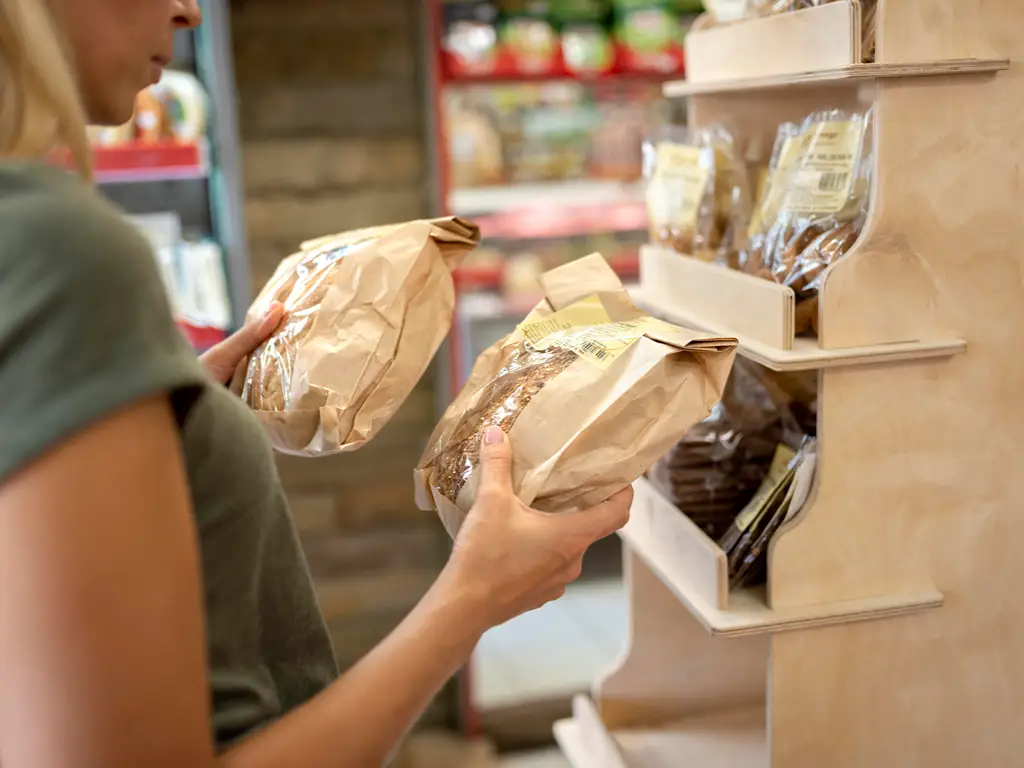
A food grade packaging material cannot be selected by resin name alone. PET, PE, PP, paper, foil, glass, and metal can all appear in food applications, but suitability depends on the exact formulation, the intended food, contact time and temperature, barrier needs, sealing process, and sales market. The right question is not simply “Is this material food grade?” It is “Is this finished package suitable and documented for this food under its real conditions of use?”
This guide explains how food safe packaging materials work in flexible pouches, how to match barrier and seal layers to a product, which documents support a supplier’s claims, and when digital or gravure production makes commercial sense. The objective is a packaging specification that protects the food and can be verified before the order is placed.
What “Food Grade” Actually Means for Packaging Materials
“Food grade” is common commercial language rather than a complete specification. In the United States, the FDA defines a food contact substance as a substance that contacts food without being intended to have a technical effect in that food; packaging components, adhesives, colorants, and some additives can all fall within this framework. A use that requires authorization must be authorized for its intended conditions before marketing. The FDA’s assessment considers migration and consumer exposure, not just the material’s generic name. You can review the agency’s explanation of food packaging and food contact substances.
“Food safe” is also used broadly in the market. Instead of relying on a supposed dictionary difference between the two phrases, translate both claims into evidence: the identity of every relevant component, its regulatory basis, its conditions of use, the finished structure, and the tests or declarations supplied with the order. A food safe plastic for a dry snack at room temperature is not automatically suitable for hot filling, fatty food, freezing, or repeated heating.
The common material families each earn their food-grade status differently:
- Plastics. PET supplies strength and a printable outer surface; PE is widely used for sealant layers; PP and CPP offer useful heat and seal properties. The permitted application depends on the grade and intended conditions of use.
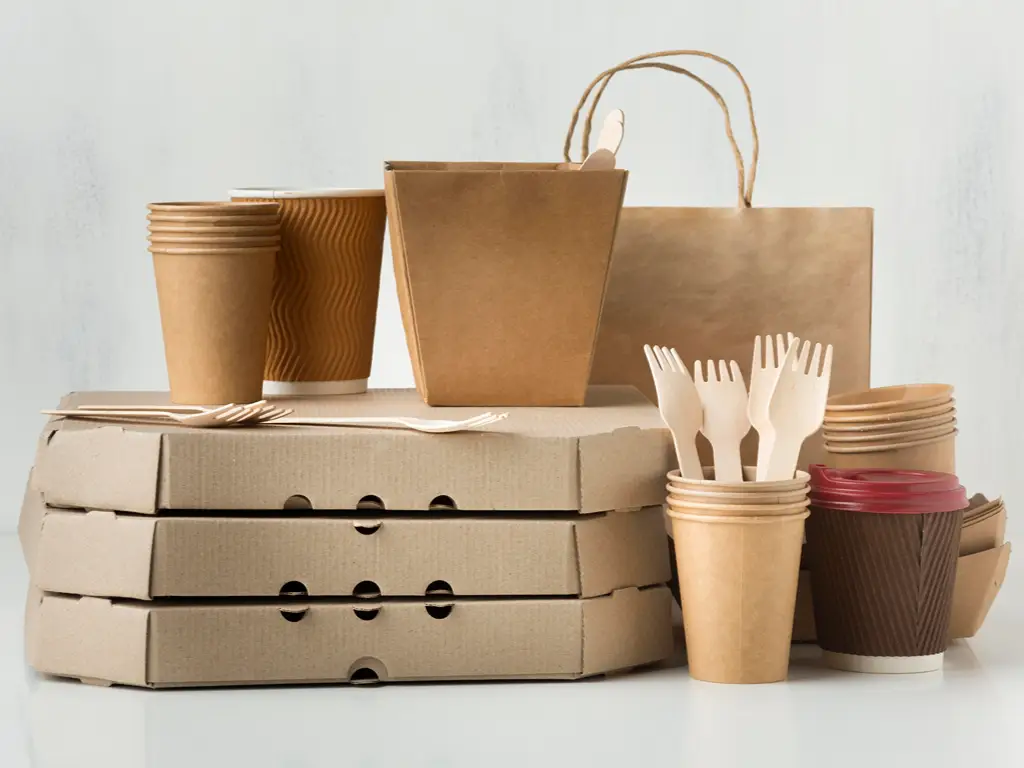
- Paper and kraft. Renewable and printable, but only food safe once coated or laminated, because untreated paper wicks oil and moisture.
- Aluminum foil. Near-total barrier against oxygen, moisture and light, though it cannot be heat sealed on its own.
- Glass and metal. Inert and time-tested, heavy and rigid in trade for that stability.
- Compostables. PLA and other compostable materials can fit selected applications, but disposal claims depend on the complete structure, certification, and available collection system.
Seeing a resin abbreviation proves little by itself. The same polymer family can contain different additives, colorants, recycled content, adhesives, and processing aids. Suitability therefore comes from the authorized formulation and intended use, supported by traceable documentation and controlled conversion. This is why every check below returns to a written specification.
Quick self-check for packaging you already own or plan to order:
Food-grade self-check
- Does the packaging have a food-contact declaration or compliance document?
- Does the supplier state which layer touches the food?
- Does the supplier operate a documented quality system, and does it hold any food-packaging-specific certification it claims?
- Does the finished construction control ink, adhesive, and other non-contact components under the intended use?
If any answer is no, the material might still be fine, but you are trusting a label instead of evidence. To fix that, you need to see what is actually inside the film.
Food Packaging Requirements Start With Conditions of Use
Choosing materials for food packaging starts with a use case, not a catalog. Give the supplier the food type, oil or alcohol content, fill temperature, storage temperature, intended shelf life, pack size, filling method, distribution route, and target market. These inputs determine whether the package needs a moisture, oxygen, aroma, light, puncture, chemical, or temperature barrier—and often several at once.
Contact time and temperature are especially important. A pouch holding dry cereal at room temperature presents a different migration and sealing challenge from a retort pouch, a hot-filled sauce, or a frozen product. Fatty and acidic foods can also interact with materials differently. “Suitable for food contact” should therefore be followed by a stated condition of use that matches the product.
Food grade bags for food packaging are complete systems rather than one food-contact film. The printed outer web, barrier film, adhesive, sealant, zipper, valve, and spout must work together. Even when only the sealant directly touches the food, other components may still matter through set-off, migration, curing, or damage to the barrier. Ask for the complete structure and declarations relevant to the finished package.
The commercial requirements matter as well. Package dimensions must match the fill weight and headspace. Seal width and zipper position must suit the filling line. Roll stock needs the correct web width, repeat length, winding direction, core, and maximum roll diameter. Preformed pouches need dimensional tolerances and agreed positions for tear notches, hang holes, valves, and spouts.
Finally, define how performance will be accepted. Depending on the application, the test plan may include seal-strength, burst, drop, leak, puncture, coefficient-of-friction, migration, solvent-retention, and shelf-life testing. Not every product needs every test, but every requirement should connect to a known failure mode. This turns “food safe packaging” from a marketing phrase into a specification a buyer can approve.
Inside a Food-Grade Flexible Material: Print, Barrier and Seal Layers
No single flexible material delivers every property at the same cost. Paper needs protection from grease and moisture, standard PE provides strong sealing but limited oxygen barrier, and foil supplies an excellent barrier but needs support and a sealant layer. Flexible packaging combines films, coatings, adhesives, inks, and closures so the finished structure can meet several requirements at once. Three-layer laminates are common, and reading them is a core skill behind a food grade packaging material decision.
The Outer Print Layer
PET, PA (nylon), MOPP and BOPP take the outside position. This layer carries the graphics, resists scuffing through shipping, and gives the pouch its stiffness so it stands and shelves well. When the wrong outer film goes on, the failure shows up fast: ink scratches off in transit and the pouch looks worn out before it reaches the shelf.
The Middle Barrier Layer
Aluminum foil, metallized PET (VMPET) and transparent high-barrier coatings occupy the middle. This layer decides shelf life, because it blocks the three enemies of packaged food: oxygen, moisture and light. Coffee goes stale, snacks turn rancid, and supplements fade when this layer is too thin or missing. A rare fourth option, transparent high-barrier films such as EVOH or coated variants, exists for products that must show themselves off while still needing protection.
The Inner Sealant Layer
PE, CPP and RCPP commonly form the inside. This layer softens under controlled heat and pressure to close the bag, and it normally provides the direct food-contact surface. When it is poorly matched to the filling and sealing conditions, the pouch may leak, peel open, or lose seal strength during storage. Odor or migration problems can also involve adhesives, inks, residual solvents, or other parts of the finished construction, so the whole laminate still needs review.
The sealant is the usual contact layer, but food-contact suitability belongs to the complete package and its intended use.
| Layer | Typical materials | What it does | What failure looks like |
|---|---|---|---|
| Outer print | PET, PA, MOPP, BOPP | Carries graphics, resists scuffs, adds stiffness | Scratched ink, worn look after transport |
| Middle barrier | AL foil, VMPET, high-barrier coatings | Blocks oxygen, moisture and light; sets shelf life | Stale coffee, rancid snacks, faded supplements |
| Inner sealant | PE, CPP, RCPP | Heat seals the pouch; touches the food | Weak seals, off-odors, product-film reactions |
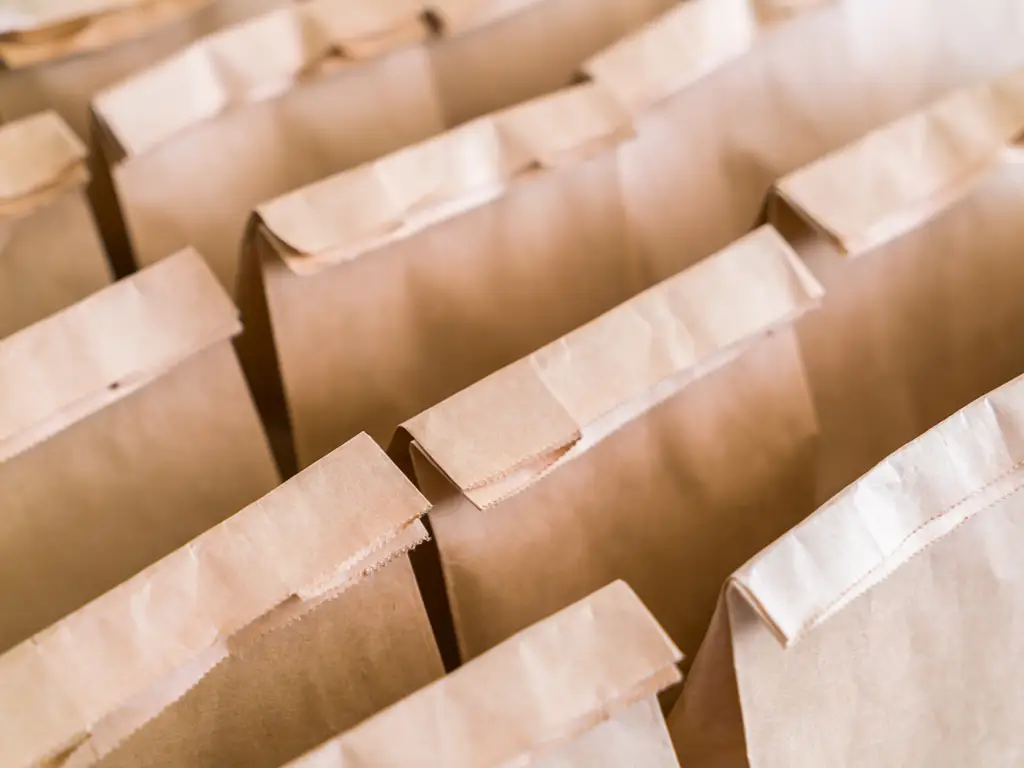
Suppliers write a structure from the outside in, so PET/AL/PE normally identifies PET as the outer web, aluminum foil as the barrier, and PE as the inner sealant. A public stand-up pouch specification may show a MOPP/VMPET/PE construction, but dimensions such as total thickness, seal width, tear-notch position, and zipper position must be selected for the actual pack size and filling process. Paper pouches follow the same systems logic: paper may provide appearance and stiffness while a separate inner film provides sealing and direct food contact.
Make this a reading habit: when a supplier says “food grade”, ask which layer, which materials, and how thick. The next question is which barrier setup your specific product needs.

Matching the Barrier Layer to Your Product
Barrier selection starts with one question: what destroys your product on a shelf? Oxygen turns fats rancid, moisture softens crisp things, light fades actives, and cold cracks the wrong plastics. Match the barrier to the enemy and most packaging failures disappear before they start.
Coffee, Nuts and Fatty Snacks: Beat the Oxygen
Oxygen is the enemy here, because it turns oils rancid and strips aromatics. Aluminum foil or a heavy metallized barrier gives the strongest block, and freshly roasted coffee adds a one-way degassing valve so the bag does not puff up. The failure you are preventing: beans that smell flat in week three and nuts that taste like cardboard.
Powders, Cereals and Dry Snacks: Beat the Moisture
Crisp textures die by humidity. A metallized or high-barrier clear layer plus a wide, well-made seal band keeps moisture out, and a decent resealable zipper protects the product after opening. The failure you are preventing: clumped protein powder and cereal that lost its snap.
Vitamins and Supplements: Beat the Light
Light degrades actives and fades tablets, so foil-backed or metallized structures are the default in this segment. Child-resistant zippers and slider closures are common here too, both for safety and for reseal life. The failure you are preventing: a supplement that looks and acts weaker than the label promises.
Frozen Goods and Liquids: Beat Temperature and Leaks
Freezer temperatures make stiff sealant films brittle, so frozen products need low-temperature-resistant PE sealant formulations. Liquids go into spout pouches with liquid-rated sealant layers, because the seal has to hold against weight and pouring, not just sit on a shelf. The failure you are preventing: cracked seals in the freezer and pouches that weep in a shipping carton.
| Product | Structure direction | The failure you are preventing | Check before ordering |
|---|---|---|---|
| Whole bean / ground coffee | PET/AL/PE with one-way valve | Aroma loss, oil rancidity | Valve spec, foil gauge |
| Fatty snacks and nuts | PET/VMPET/PE | Rancidity over shelf life | Barrier layer type |
| Powders and cereals | MOPP/VMPET/PE | Moisture clumping | Seal band width, zipper quality |
| Vitamins and supplements | Foil-backed, light-blocking | UV potency loss | Opacity, child-resistant closure if needed |
| Frozen food | Low-temp PE sealant | Seal brittleness at freezer temps | Low-temperature seal spec |
| Pet food (large format) | Heavy-gauge PET/AL/PE | Puncture, fat oxidation | Total thickness, burst test |
| Liquids and sauces | Spout pouch, liquid-rated sealant | Leaks in transit | Spout seal integrity, drop test |
Two environmental claims deserve a checkpoint here because they apply to the complete package, not its most visible layer. Metallized laminates and multi-material constructions may not be accepted by local collection systems, so ask the supplier to identify the claimed recycling stream and the market where that route exists. Compostable claims need the same discipline: request the applicable certification, test standard, disposal conditions, and scope of the certified structure. A kraft-paper appearance alone does not establish recyclability or compostability. At the same time, mono-material structures and short-run digital production give brands more ways to test a package before committing to a long run.
Eco claims: verify the basis
Support a recyclable or compostable claim with the applicable structure, market, collection or disposal route, and certification or test basis before artwork carries the claim.
That last shift matters most at the moment you place an order, so the next section is about the order itself.
Ordering Food-Grade Custom Packaging: Routes, MOQ and Spec Sheets
Custom food-grade pouches reach you through two production routes, and the route you pick sets your minimum order, your upfront cost and your calendar.
| Digital printing route | Gravure printing route | |
|---|---|---|
| MOQ | Baishen: from 500 pieces per SKU | Baishen: typically 5,000-10,000 pieces; quote by project |
| Setup cost | No plate or cylinder fees | Per-color cylinders, one-time investment |
| Lead time | Baishen: 7-10 working days after approval | Baishen: typically 15-20 working days |
| Color handling | Full-color digital workflow; confirm achievable color matching | Separated colors within the available press stations |
| Mixed designs | Multiple SKUs print together (split run) | One design at a time |
| Best for | New SKUs, limited editions, structure trials | Stable demand at the lowest unit cost |
The quantities and lead times above are Baishen’s published production ranges, not universal industry constants. Final terms depend on size, structure, finishing, quantity, and artwork approval.
The case behind those numbers shows what the route choice is worth. A startup wanted to launch 30 SKUs, each design carrying more than 8 colors. On a gravure route, a 5,000-piece minimum per SKU would have meant roughly 150,000 pouches plus around 240 print cylinders, all before a single unit was sold. On the digital route, the same order went from approved artwork to finished goods in 8 days, then reached the US by air in 7 more (a 30-SKU launch case).
At Baishen Pack, we use HP Indigo digital presses for the trial and short-run stage. Our published digital-printing route starts from 500 pieces per SKU without cylinder fees and supports split runs for designs using the same material and size. We state a 7-10 working day production range after approval for qualifying digital jobs. When the structure has proven itself and volumes stabilize, we can compare the same specification on gravure so the route follows the order economics.
Send us the food type, target shelf life, pouch size, structure if known, quantity, and SKU count. We will recommend a suitable route and show the material specification in the quote.
Review My Packaging RequirementsWhichever route you take, put these six items on the spec sheet before you sign:
- Structure notation written outer to inner (for example PET/AL/PE)
- Total thickness in microns
- Seal band width
- Accessory specs: zipper width and position, tear notch, valve
- Print color count
- Lead-time basis: counted from artwork approval or from deposit
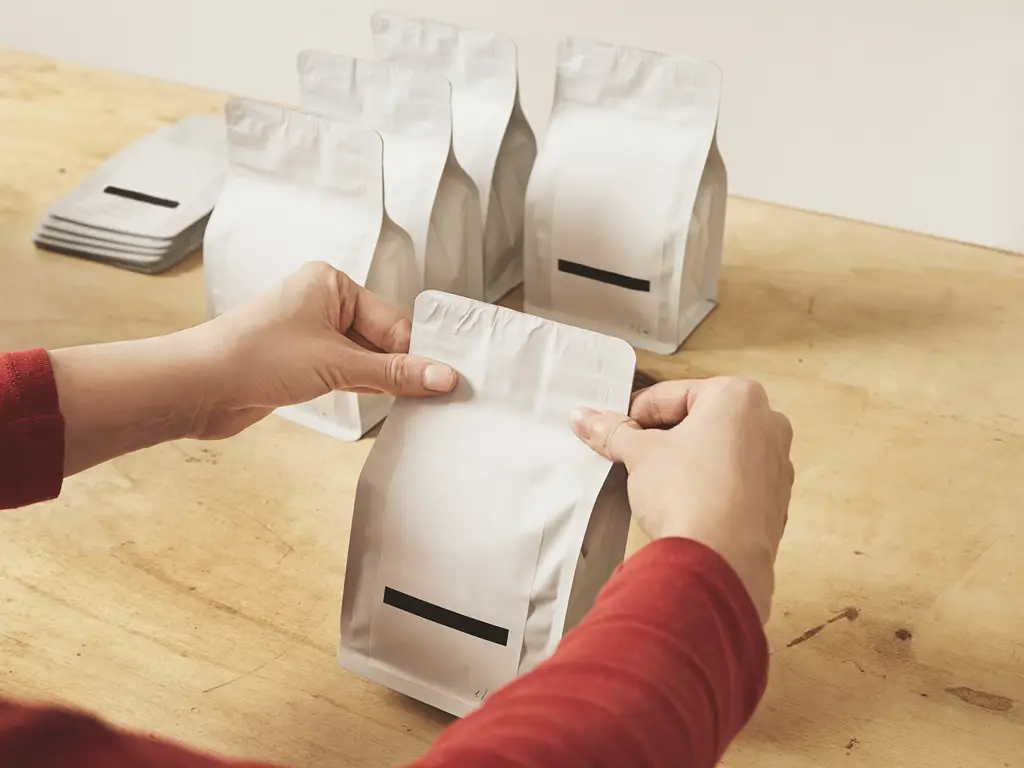
One boundary worth stating plainly: the digital route is not always right. A proven SKU with stable, forecastable demand belongs on gravure, where the unit cost is lowest. The digital route wins exactly when the structure or the demand is still unproven.
An order, though, is only as good as the claims behind it. The last check happens before the deposit, not after.
How to Verify a Supplier’s Food-Grade Claims
A supplier saying “we are food grade” is the beginning of the conversation, not the end of it. Verification runs in three steps, each answering a different question.
Step 1: check the management-system and site certificates. ISO 9001 indicates a documented quality-management system, but it is not by itself a declaration that a package is suitable for food contact. BRCGS Packaging Materials Issue 7 is a packaging-specific standard recognized by the Global Food Safety Initiative. Verify the certificate number, certified site, scope, issuing body, and expiry date. Even a valid site certificate manages processes; it does not replace the compliance documents for your structure.
Step 2: check the product and batch documents. Request the tests relevant to the agreed specification and production lot. Solvent-retention or curing evidence can help control odor and residual-solvent risks in laminated packaging. Migration testing addresses substances that may transfer into food. For EU plastic food-contact materials, Regulation (EU) No 10/2011 sets an overall migration limit and specific requirements, with test conditions chosen for the intended use. Physical tests such as seal strength, leak, burst, drop, and puncture checks show whether the package can survive filling and distribution.
Step 3: check the declaration of compliance or regulatory basis. For US sales, relevant components need a suitable regulatory basis under the FDA food-contact framework for the intended conditions of use. For EU sales, Regulation (EC) No 1935/2004 establishes the general requirement that food-contact materials must not transfer constituents in quantities that endanger health, unacceptably change food composition, or deteriorate sensory characteristics. The supplier’s document should identify the material or structure, applicable legislation, limitations, intended conditions, and traceability details—not merely say “FDA approved.”
A boundary to keep you honest: an industry-standard practice is not evidence about a specific supplier, and “everyone does it this way” replaces no report. If a claim cannot be produced as a document tied to your structure and batch, treat it as unverified.
The three documents to request before any deposit:
Documents to request before any deposit
- Site and system certificates: verify holder, address, scope, issuing body, and validity
- Relevant test reports: migration or compliance testing plus seal, leak, burst, drop, or puncture results as required
- Food-contact declaration or regulatory basis naming the structure, intended conditions, limitations, and applicable market
With documents in hand and a route chosen, the remaining question is how to fold all of this into how you actually run packaging decisions.
What This Means for Your Packaging Business
Everything above reduces to three findings you have already seen proven. Structure, not material names, decides how a product survives on a shelf. Verification lives in documents tied to your batch, not in adjectives. And the production route sets the cost of finding out whether your structure works.
Treat the first order as a controlled commercial trial and define what it can prove. A short digital run can confirm artwork, dimensions, filling compatibility, sealing setup, handling, and early market response without a cylinder investment. It cannot by itself prove a six- or twelve-month shelf life; that conclusion still needs an appropriate shelf-life protocol and agreed acceptance criteria. Put the structure notation into the contract, include the required documents and tests in the order flow, and choose the print route after the technical requirements are fixed. When both the structure and demand have been validated, a gravure quote can show whether the lower unit cost justifies its setup and volume.
Before you send your next inquiry, you have a short list to lock down: the structure written outer to inner, the three verification documents, and the route that matches your stage. A supplier who answers those three cleanly is a supplier who has answered them before.
If you want a second opinion before committing to a structure, send us the product, contact conditions, target shelf life, pack size, sales market, and planned quantity. We can review the specification, suggest a suitable flexible structure, and provide stock samples so you can evaluate the format and material feel before custom production.
Build a Verifiable Food-Packaging Specification
Tell us what the package must protect, how it will be filled, and where it will be sold. We will help translate those requirements into a structure and production route.
Discuss Your Food PackageReferences
- U.S. Food and Drug Administration. “Food Packaging & Other Substances that Come in Contact with Food—Information for Consumers.”
- European Union. “Regulation (EC) No 1935/2004 on materials and articles intended to come into contact with food.” 2004.
- European Union. “Commission Regulation (EU) No 10/2011 on plastic materials and articles intended to come into contact with food.” 2011.
- BRCGS. “BRCGS Packaging Materials.” Issue 7.