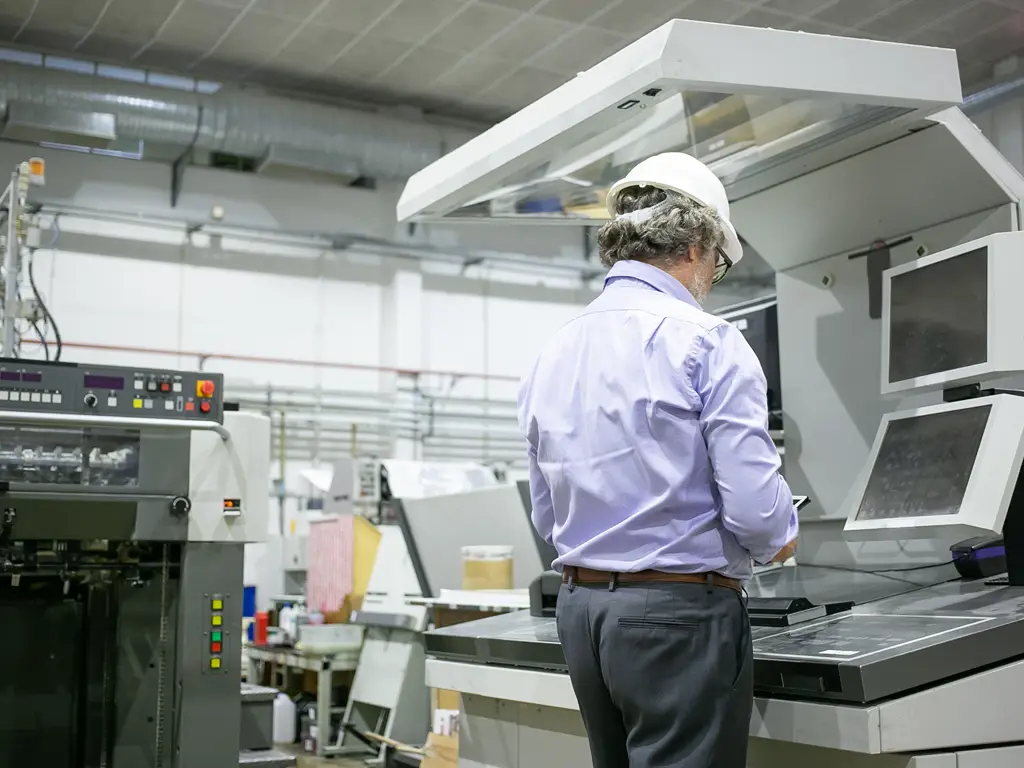
Digital printing on plastic film places production artwork directly onto the printable web used for pouches, sachets and roll stock. The process serves food, coffee, pet food, supplements and personal-care packaging, with the film material, surface treatment, ink system and curing conditions determining whether the image remains bonded through lamination, converting and distribution.
What Digital Printing on Plastic Actually Means
Flexible-packaging digital printing produces complete graphics on treated plastic film or finished pouch material. It differs from industrial decoration on rigid bottles and parts, high-speed date coding, and hobby printing on plastic sheets because the printed web must later survive lamination, slitting, heat sealing, filling and transport.
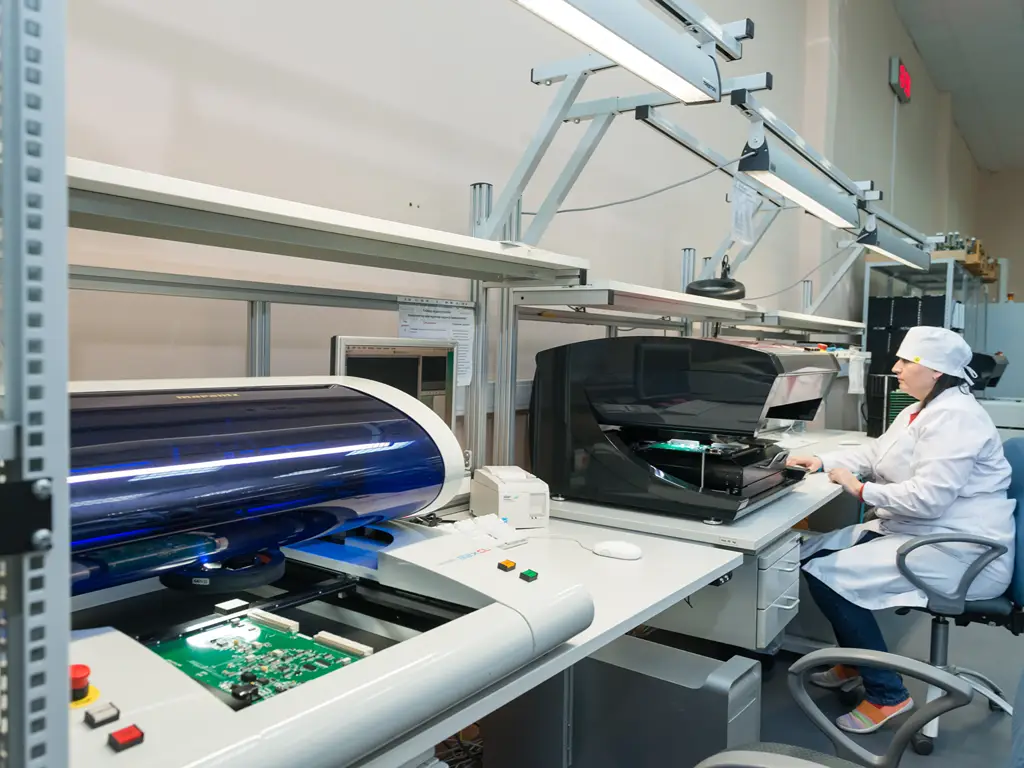
Digital means the press takes the file straight to the substrate. An inkjet head or an electrophotographic imaging system, of the kind used in HP Indigo presses, lays down the image, and the ink is cured with UV light or heat. There is no plate and no cylinder in the loop, which removes plate fees, cylinder engraving time and the need to force several designs through shared tooling.
Every printing method still has a place on a pouch line. Flexographic printing, with its rubber or photopolymer plates, handles mid-volume runs efficiently. Rotogravure, with engraved cylinders, owns very long runs where per-unit cost dominates. Screen printing covers specialty effects. Hot stamping decorates finished bags in short sequences. Digital sits at the short and medium end, and it is the only method that treats every piece as an individual impression, which is what makes serial numbers and mixed designs possible.
A normal office printer cannot produce a sellable pouch. Packaging presses run engineered inks on pre-treated films, and the surface preparation determines whether the image wets, anchors and survives later converting operations.
Which Plastic Films Take Digital Ink
Asking “can you print on plastic” is like asking “can you print on paper” without saying glossy or newsprint. The film structure decides the answer, and a pouch film is a sandwich, not a sheet.
The Outer Print Layer Decides Whether Ink Sticks
Plastic is non-porous, so ink cannot soak in the way it does into paper. It can only wet the surface and anchor to it after curing, and wetting only happens when the film’s surface energy is higher than the ink’s surface tension, with a working margin. Converters are advised to keep the substrate’s surface energy 8 to 10 mN/m above the liquid it is applying (Converting Quarterly, 2025). Untreated polyolefin films sit well below that margin, which is why ink beads, smears, or peels off them.
The fix is corona treatment: an electrical discharge that raises the film’s surface energy so inks and adhesives can anchor. Film makers ship printing-grade outer layers already treated, and converters re-check the level before running. Treated polyester films, for example, are typically specified between 42 and 56 dyn/cm for reliable adhesion (Pilcher Hamilton, 2025). It also explains a familiar failure. A converter can print your pouch, while the same art on an office polypropylene part smears, because the film arrived treated and the part didn’t.
How PET, BOPP, PE, PA, CPP, and PVC Behave Differently
Film names are not interchangeable print specifications. Each polymer brings a different starting surface energy, dimensional stability, heat response, stiffness, and end use. The same ink set may work across several films, but the treatment level, primer, white-ink strategy, curing energy, and adhesion test must be set for the actual outer web. A converter should therefore approve the printed laminate, not just claim that the press can print “plastic.”
Plastic film behavior on a digital packaging line
| Film | Where it is used | Digital-print behavior | Main control point |
|---|---|---|---|
| PET / BOPET | High-quality outer web for coffee, supplements, retort and barrier pouches | Dimensionally stable and well suited to fine graphics, reverse printing and lamination after treatment or priming | Confirm treatment level, primer compatibility and bond strength after curing |
| BOPP / MOPP | Snack, confectionery, dry-food and matte-finish pouches | Low natural surface energy; prints well when freshly treated, but treatment can decay during storage | Re-test dyne level before printing and verify rub resistance on matte surfaces |
| PE / LDPE / MDPE | Mono-PE recyclable packs, liners and soft flexible webs | Very low surface energy and more stretch than PET, so registration and heat input require tighter control | Use compatible treatment or primer and lower-energy curing to prevent distortion and blocking |
| PA / nylon | Vacuum packs, meat, liquids and puncture-resistant structures | Strong and dimensionally stable, but moisture absorption can change handling and adhesion | Condition the film consistently and test adhesion after lamination and moisture exposure |
| CPP | Heat-seal and retort layers, occasionally a printable outer web | Good heat resistance but low surface energy; direct printing is less common than using it as the inner sealant | Confirm corona treatment and make sure curing does not change seal performance |
| PVC / PETG shrink film | Shrink sleeves and specialty labels rather than standard pouch bodies | The image must distort predictably with the sleeve, while curing heat must stay below the point that starts premature shrink | Use a shrink-compensated file and confirm ink, migration and market-specific compliance |
The practical pattern is simple. PET is the safest high-detail outer web; treated BOPP is efficient for snack and matte applications; PE demands the most control when it must be both printable and recyclable; nylon earns its place when puncture resistance matters; CPP is usually more valuable as the sealing layer; and PVC or PETG belongs to shrink decoration rather than standard laminated pouch bodies.
Barrier and Sealant Layers Decide Whether the Pouch Still Performs
Printing only touches the outer layer. Underneath sit two more layers that decide whether the printed pouch actually protects anything. The barrier layer, usually aluminum foil or metallized PET, blocks light, oxygen, and moisture. The sealant layer, PE or CPP, is the food-contact side and the side that heat-seals. When you choose a film structure, you’re choosing all three jobs at once.
Three layers, three jobs
| Layer | Typical materials | Job it does | What it means for your print job |
|---|---|---|---|
| Outer print layer | PET, PA, BOPP/MOPP | carries the digital image, must stay corona-treated | ask what surface energy the film ships at. |
| Barrier layer | AL foil, VMPET | blocks oxygen, light, moisture | printing cannot add or fix barrier, structure choice does. |
| Sealant layer | PE, CPP, VMCPP | food contact and heat sealing | decides filling line compatibility and product wetness. |
So a printed structure is quoted as a stack. A common stand-up pouch runs about 100 microns in a MOPP/VMPET/PE construction, matte outside with a metallic inner lining, while Mylar-style bags run about 120 microns with options such as a 28 mm child-resistant zipper. Roll stock for form-fill-seal lines uses the same logic in three plies: an outer printable layer of PET, PA, or MOPP, a barrier ply of AL or VMPET, and an inner sealing ply of PE, CPP, or VMCPP. Paper-faced kraft laminates are the one partial exception, since the paper side prints with absorption rather than wetting, and spout pouches use the same film logic with the spout welded in.
How Digital Print Fails, and the Checks That Catch It
Three failure patterns account for most digital print complaints on plastic. First, rub-off: ink applied to an under-treated or worn film surface survives the press but smudges when scratched. Second, heat distortion: some films warp or shrink under aggressive curing, which shows up as waviness near seals. Third, transit abrasion: prints that pass a bench test can still whiten against each other across a pallet of vibration.
Every one of these has a check you can demand before mass production. A tape pull test after curing, a cross-hatch cut with tape over it, and a small vibration or abrasion cycle on finished samples. Ten minutes of testing catches what a screenshot of a beautiful proof never will.
A proof that looks perfect on screen proves adhesion to nobody. Sign off on a physical sample only after a tape pull and a rub check, then keep that signed sample as the reference for the production run.
Digital vs Plate: Where the Run Size Flips the Math
Run size, SKU count, color count and artwork stability determine whether digital or plate printing produces the lower total cost. Digital carries no cylinder fee, supports minimums around 500 pieces, and typically runs in 7 to 10 business days. Plate routes commonly begin near 10,000 pieces and take 23 to 25 days, with a separate plate or cylinder set for each design. The figures are detailed in our digital-versus-plate comparison, while the broader advantages of digital printing become strongest when an order contains multiple SKUs, frequent artwork changes or variable data.
Digital vs plate route, five dimensions
| Dimension | Digital line | Plate line (flexo/gravure) |
|---|---|---|
| Setup cost | no plate or cylinder fee | one plate per color, cylinders for gravure. |
| Minimum order | ~500 pcs typical | ~10,000 pcs typical. |
| Lead time | 7–10 business days from approved art | 23–25 days including plate making. |
| Colors | no practical limit, full gamut | ~10 colors practical cap. |
| Multiple SKUs | printed together in one run, variable data possible | each design runs separately. |
Published minimums vary because printing is only one stage of a finished pouch. Digital lines may start between a few hundred and roughly 1,000 pieces per design, while plate-based quotations often begin in the high thousands. Material-roll minimums, pouch size and converting setup can raise either figure. A “low MOQ” claim is meaningful only when the supplier labels the print route and states the finished-bag minimum per SKU.
On unit cost, the honest version is this: below the crossover, digital wins because the plate fee has nothing to amortize over; above it, plate wins because the fee disappears per unit and the press runs faster. The crossover point is not a fixed number. It moves higher as colors and SKU count rise, because every extra color or design adds plates on the plate route and adds nothing on the digital route. Two brands with the same volume can therefore get opposite answers if one has six designs and the other has sixty.
Where each route wins, by run band
| Run band | Digital’s role | Plate’s role | Switch signal |
|---|---|---|---|
| Under 500 pcs | sampling and pilots only | not viable | if a supplier quotes plates here, walk. |
| 500–5,000 | home turf, multi-SKU and seasonal | uneconomic | plate quotes rarely come back competitive. |
| 5,000–50,000 | contested zone, quote both | contested zone, quote both | quote both whenever this is your steady state. |
| Over 50,000 per design | backup for variants and personalization | per-unit cost wins | steady single-design demand above ~50k means re-quote on plates. |
Treat the middle band as the negotiation zone rather than a tie-breaker problem. Neither route wins by default there, so the run-band table is what your quote request should be built around.
Same artwork, two floors
Plate line minimum
10,000
vs
Digital line minimum
500
That ratio, not the unit price, is what changes what a brand or distributor can stock.
The direction of the market is worth one number. Smithers forecasts digital print on flexible packaging to grow at an 11.6% CAGR to 2030, faster than any other packaging print segment (Smithers, 2025). Digital still holds only about 4.1% of total packaging and label print value, roughly $22.0 billion in 2025 (Smithers, 2025), which tells you capacity is early in the adoption curve rather than saturated.
Digital is still the wrong answer in three cases. A single design running in the hundreds of thousands of pieces belongs on plates, where the unit cost gap compounds. Special ink systems, metallic spot inks, and some high-barrier chemistries remain plate-friendly first. And if your filling line needs a specific sealant behavior, the structure decision leads and the print route follows, never the reverse.
Send us the film structure, artwork and quantity per design. We will label the digital and plate routes separately, including MOQ, tooling and production time.
Get a dual-route quoteFrom Artwork File to Delivered Bags
After the print route is selected, the job moves through structure confirmation, dieline setup, color proofing, printing, lamination, converting, quality control and shipment. Digital programs compress the cycle but do not remove those checkpoints. Our digital printing packaging guide explains the production sequence and the artwork information required at each stage.
Inquiry and structure: state the product (dry, liquid, or powder), weight, shelf-life target, and filling method.
Files and dieline: get the dieline for your exact bag and size, place art with bleed and safe zones.
Digital proof: review a proof, usually returned within a day or two, then sign a physical sample.
Print, laminate, convert: the approved file runs, film is laminated and made into bags or wound to roll.
QC and shipping: checks at incoming material, in-process, and finished-goods stages, then packed and shipped by air or sea.
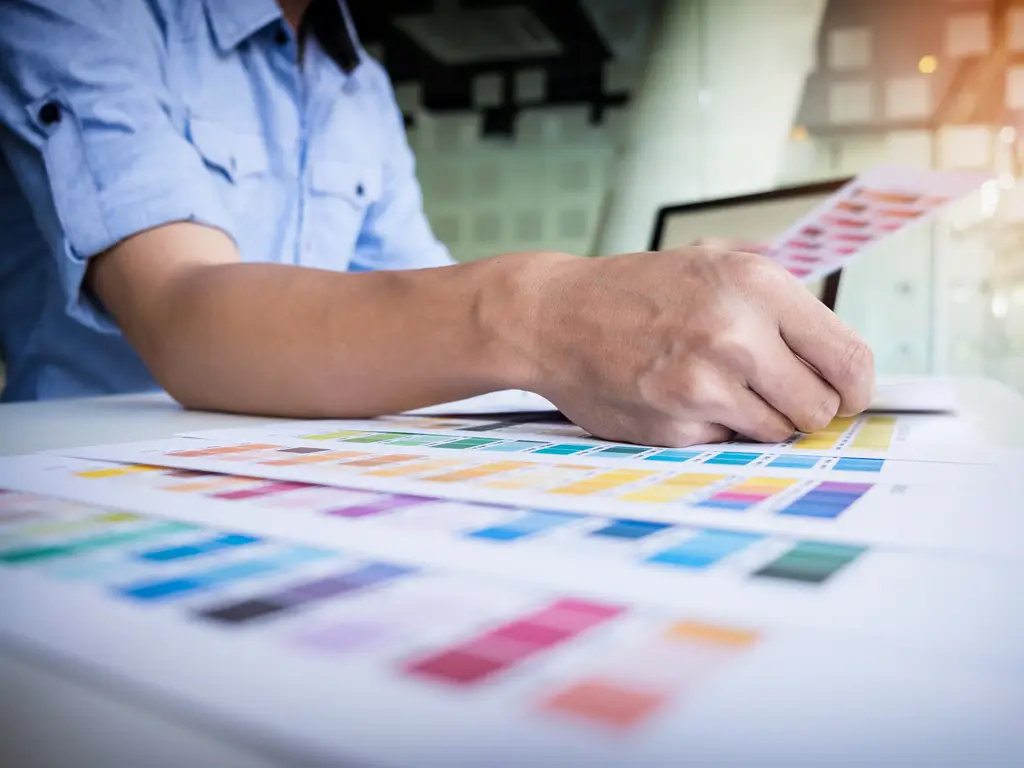
Each step carries one judgment that matters. At inquiry, the structure decision comes first because contents drive it: a liquid needs a spout and a heavier sealant, a nutraceutical may need the child-resistant zipper. At file stage, confirm how spot colors are handled, since digital presses reproduce Pantone shades from their ink set rather than dedicated spot stations, and the proof is where that gap gets measured. At proof stage, sign a physical sample, not a PDF, and run the tape test from the last section. At production, ask which checkpoints your order passes and whether you get notified at shipping. At delivery, check cartons against the signed sample before the goods leave your 3PL or reach shelves.
Color boundary
Your screen is RGB. The press is a measured color space. The signed physical sample is the only contract between the two — no signed sample, no production run.
Everything after that sample is reproduction, not interpretation.
How to Screen a Digital Pouch Supplier
Four checks separate a genuine in-house digital line from a broker that outsources production: the finished-bag minimum, the production time from approved artwork, support for mixed SKUs and variable data, and control of printing, laminating and bag making under one quality system.
Ask what the minimum really is, for your bag type and structure, in writing. Ask what the lead time is from approved artwork, not from order date, and get the two dates distinguished. Ask whether they run mixed SKUs in one production lot and whether they can print variable data such as per-bag serial numbers. Ask whether printing, laminating, and bag-making happen in their own facility, because every outsourced handoff adds days and dilutes accountability.
Credentials deserve the same specificity. An “ISO-certified factory” claim is worth asking to see as a certificate number. Material-level certifications like SGS or BRC belong to film suppliers, so ask which certification applies to your actual structure. Capacity figures, like the number of production lines or bag-making machines, are only meaningful when they come with a scope, so ask what the number counts.
Three trap checks close the list: confirm the low MOQ applies to your specific bag type rather than a lead product, confirm whether proofs and samples carry fees, and confirm who prepares the food-contact compliance documentation for your market.
Supplier screening checklist
MOQ for my bag type, in writing, per design.
Lead time from approved artwork, not from PO.
Mixed-SKU split run confirmed for my SKU count.
Variable data (serial numbers) available on my run.
Printing, laminating, bag-making in-house.
Certificate numbers for any claimed certification.
Low-MOQ terms and proof fees stated upfront.
Food-contact documentation responsibility assigned.
What This Means for Your Pouch Program
For a distributor, wholesaler or brand managing many designs, the decision is made across a portfolio rather than one pouch. Digital reduces the inventory exposure of new, seasonal and regional SKUs, while plate printing protects the unit economics of proven high-volume designs.
Stocking and Sample Runs, Reread
The plate fee is what forces a ten-thousand-piece floor per design, and the 500-piece digital floor follows from its absence. Read that as inventory arithmetic: the minimum capital parked in one printed SKU drops from ten thousand units to hundreds, and a seasonal gamble stops being a bet on one design. One launch ran 30 SKUs at 100 to 1,000 pieces per SKU, with a different serial number printed on every bag, which keeps split-run inventory traceable. A distributor can extend the same logic to market tests: twenty designs, small batches, real sell-through data, then reorders only for the designs that moved.
The Barbell: Digital Lines for Breadth, Plate Lines for Depth
The crossing point from the run-band table cuts portfolio strategy into two halves. New SKUs, seasonal editions, regional variants, and anything unproven belong on the digital line, where the cost of being wrong is a small batch instead of a warehouse of dated stock. Steady winners with stable single-design demand above roughly 50,000 pieces belong on plates, where unit economics take over. Screening suppliers for this program means the three hard parameters, minimum, lead time, and split-run capability, and it means judging them on those numbers rather than on unit price alone.
One pouch program, two lines
| Program slot | Route | Why |
|---|---|---|
| New SKU or market test | digital | hundreds per design, real data before commitment. |
| Seasonal or regional editions | digital | date-bound stock, small floors avoid markdowns. |
| Steady winner, stable demand | plate above ~50k per design | unit cost dominates once the design is proven. |
| Numbered or personalized variants | digital | variable data only exists on plateless lines. |
Build Your Plastic Film Program With Baishen Pack
At Baishen Pack, we match PET, BOPP, PE, nylon and specialty laminates to the product barrier, sealing and finish requirements before printing. Our HP Indigo digital lines support minimums from 500 pieces, 7–10-business-day production, unlimited colors, mixed-SKU runs and per-bag variable data. Send us your product, artwork and quantity per design for a structure recommendation and a labeled digital-versus-plate quote.
Discuss Your Plastic Film ProjectReferences
- Converting Quarterly. “Secrets to successful corona treatment for flex-pack films.” 2025.
- Pilcher Hamilton. “Corona Treated Polyester Films: Enhancing Surface Energy for Better Adhesion.” 2025.
- Smithers. “Corrugated and flexibles drive digital print for packaging.” 2025.
- Smithers. “The Future of Digital Print for Packaging to 2030.” 2025.