
Are Mylar Bags Recyclable? The Honest Answer (and What to Do Instead)
Short answer: almost never through your curbside bin. Mylar bags are built from fused layers of plastic film and aluminum. The recycling systems most households have access to reject them for two specific reasons. But “not recyclable” is only half the story. These bags are far more reusable than most people assume. And if you’re buying new packaging, there are genuine alternatives worth comparing.
What follows is the full picture: what mylar bags are made of, why recycling rejects them, and where they end up. Then how to reuse them safely, and what the dilemma means if you sell products in them.
What Mylar Bags Are Made Of — and Why That Matters
“Mylar” is DuPont’s trademark for a biaxially oriented polyester film (BoPET). In everyday use, the word has become shorthand for any shiny, silvery packaging bag, but the material logic is the same: a food-grade mylar bag is a sandwich of layers.
A typical structure is a printed PET outer layer, then an aluminum foil or metallized PET middle layer, and a PE inner layer that heat-seals. Each layer has one job: print surface, light and moisture barrier, sealability. Stack them together and you get a bag that blocks oxygen, moisture, and UV light. That’s how coffee, dried food, and supplements stay fresh for months.
The catch is that performance comes from the layering, and the recycling problem comes from the layering too. The same sandwich that protects your product is what makes the bag impossible to sort as any single material. Thickness matters here as well. Bags are graded in mil (thousandths of an inch). A 5-mil storage-grade bag is a completely different product from the thin pouch a bag of crackers comes in. More on that distinction later.
The Honest Answer: Why Curbside Recycling Rejects Mylar Bags
Technically, mylar bags can be recycled. In practice, curbside systems reject them at two separate checkpoints, which is why their actual recycling rate is close to zero.
Curbside Systems Can’t Handle Flexible Film
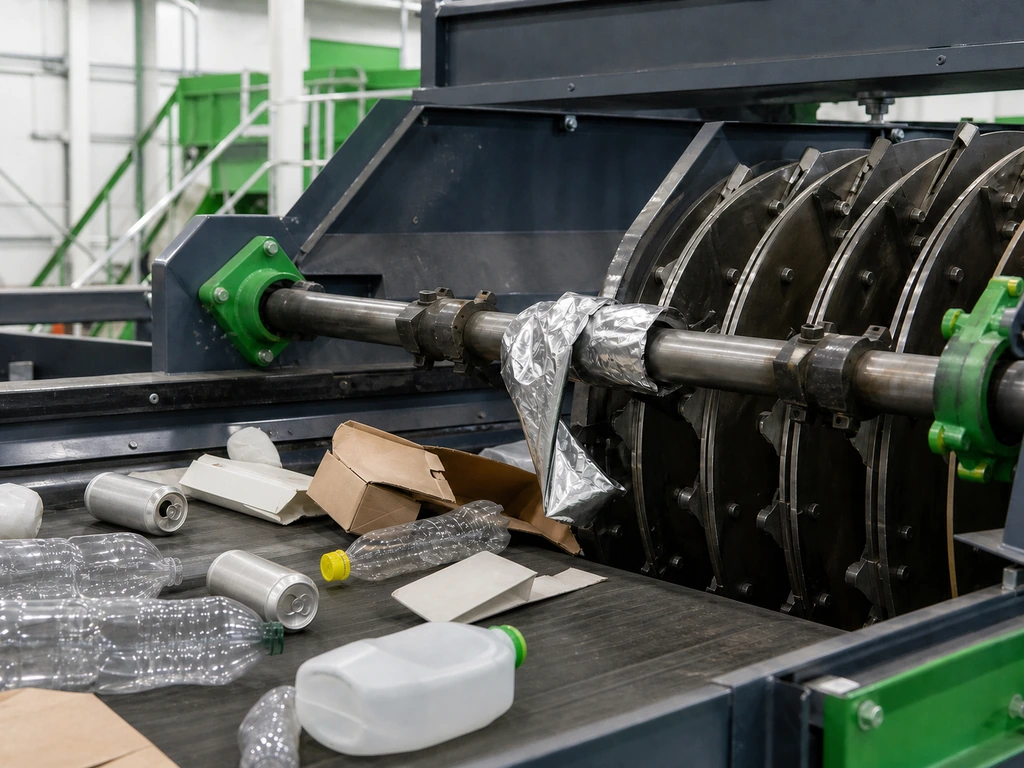
Most curbside programs feed single-stream recycling into a materials recovery facility (MRF), where a combination of sorting machines and workers separates paper, glass, and plastics. Flexible film is the system’s worst customer: it wraps around rotating shafts and disc screens, causing breakdowns, delays, and contamination of other material streams. The Recycling Partnership’s film and flexibles work documents exactly this failure mode at MRFs (The Recycling Partnership, 2026).
Note what that means: a mylar bag gets rejected at this first checkpoint before anyone even considers whether the material could be recycled. Plain polyethylene bags fail the same test. The problem is the form (soft, stretchy film), not the material itself.
Mixed Layers Are Too Expensive to Separate
Suppose a bag survives to a facility that does accept flexible material. Now the second checkpoint: the plastic and aluminum layers are bonded tightly together, and separating them requires advanced processes like solvent-based recycling or thermal depolymerization. Those processes are energy-intensive, expensive, and installed at only a handful of reclaimers. Even when separation happens, the aluminum fraction is often discarded rather than recovered. EcoEnclose, a packaging supplier that studied metalized wrappers in depth, cites a separation case where the input was 18% foil and 82% plastic. Only the plastic fraction was recovered (EcoEnclose, 2022).
The economics close the case: recovering a few cents’ worth of material costs more than the material is worth. “Recyclable in theory” is how mylar bags stay out of recycling bins in practice.
Where Mylar Bags Actually End Up
Specialized recycling programs do exist. TerraCycle is the best known: you can buy a Zero Waste Box for candy and snack wrappers, fill it, and ship it back for processing (TerraCycle, 2026). Some brands sponsor free programs for their own packaging.
Three realities keep these programs from being a mainstream answer. First, shipping economics: TerraCycle’s own program guidance sets a five-pound minimum before a shipment is worthwhile. Second, sponsorship is fragile. Clif Bar’s free wrapper recycling program, one of the most prominent examples, ended in early 2020 (EcoEnclose, 2022). Third, collected material doesn’t always find a recycling home; portions still end up landfilled or incinerated.
Specialized recycling is a useful supplement, not an outlet. For most households, that leaves a more practical path: reuse.
Can You Reuse Mylar Bags? A Practical Rubric
Yes, and this is where mylar bags quietly outperform the rest of the packaging aisle. A bag’s reusable life depends on three variables: closure type, thickness, and what it has held. Run any bag through those three checks and you’ll know exactly how many more uses it has in it.
Heat-Sealed vs. Zipper Bags: Two Different Reuse Logics
Heat-sealed mylar bags, the kind used with an impulse sealer for long-term food storage, lose a strip of bag with every cycle. To reopen you cut the seal off, and to reseal you seal a new line further down. Freeze-drying communities have documented the result: the bag gets measurably shorter after each use, which puts a hard physical ceiling on reuse. Typically you get a handful of cycles before there’s no bag left to seal.
Zipper mylar bags are designed for repeated opening and closing. Their reuse life is set by two things instead: whether the zipper still presses closed along its full length, and whether the inner layer is clean. A good zipper pouch can serve months of casual reuse, as long as it passes the next two checks.
Washing, Drying, and Food-Safety Basics
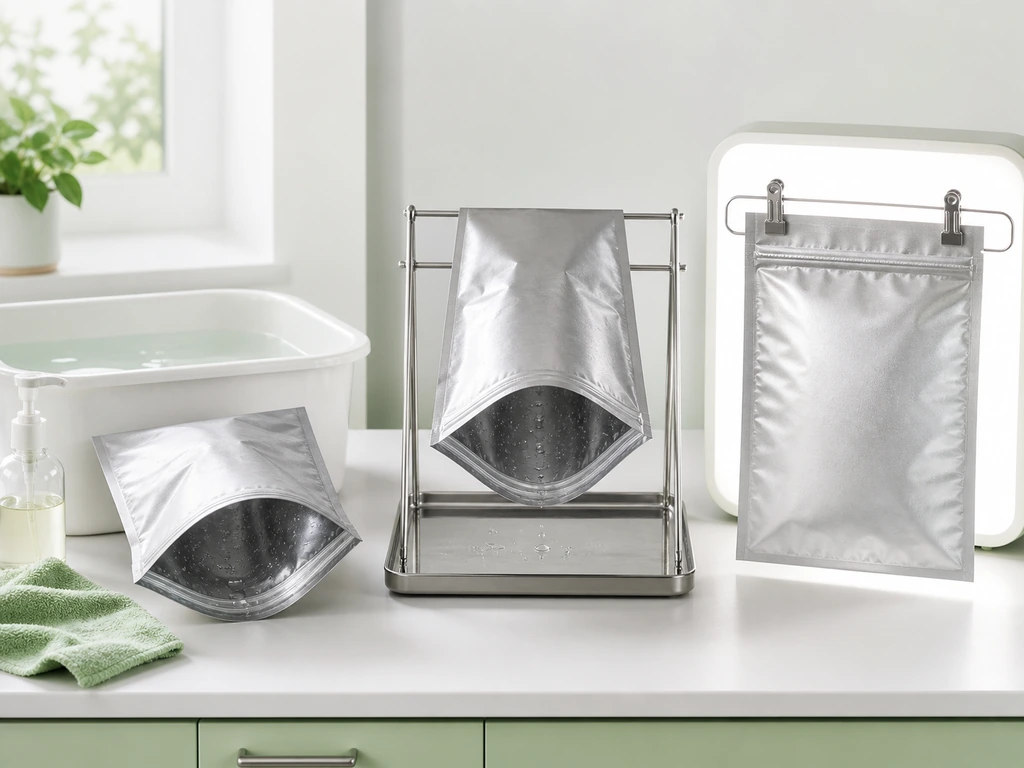
Wash with warm water and mild soap on the inner layer, then let the bag dry completely. Residual moisture is what turns a reused bag into a mold factory. On materials: mylar’s PET base is not plasticized with phthalates, and the FDA’s recent phthalates review confirms industry has largely abandoned those additives in food-contact plastics (FDA, 2024).
On the microplastics question that keeps coming up: migration research is still early, and food-grade films are engineered to stay within regulatory limits under normal use. But a scratched, creased, or degraded bag is no longer “normal use.” If the inner layer shows visible wear, retire the bag from food contact. Two practical boundaries: bags that held oily contents or strongly aromatic foods (spices, coffee) are hard to fully clean, so don’t rotate them into other foods.
When to Retire a Bag: Thickness, Damage, and Long-Term Storage
Thickness is the quietest variable and the most decisive one. Thin bags from store-bought products (cereal liners, cracker pouches, snack wrappers) have thin barrier layers and should only be trusted for short-term, dry uses. Storage-grade bags in the 5-mil range are built for long-term food storage and hold up to reuse. Experienced preppers put it bluntly: they wouldn’t risk long-term storage in a thin bag that’s already been used once.
Before each reuse, do a 10-second inspection. Pinholes, crease lines (where the metallized layer micro-cracks), a zipper that doesn’t press flat, seal edges that peel: any of these retires the bag. And any bag that has held oily or high-moisture contents stays out of the long-term rotation, period.
If You’re Buying New: Alternatives That Are Actually Recyclable
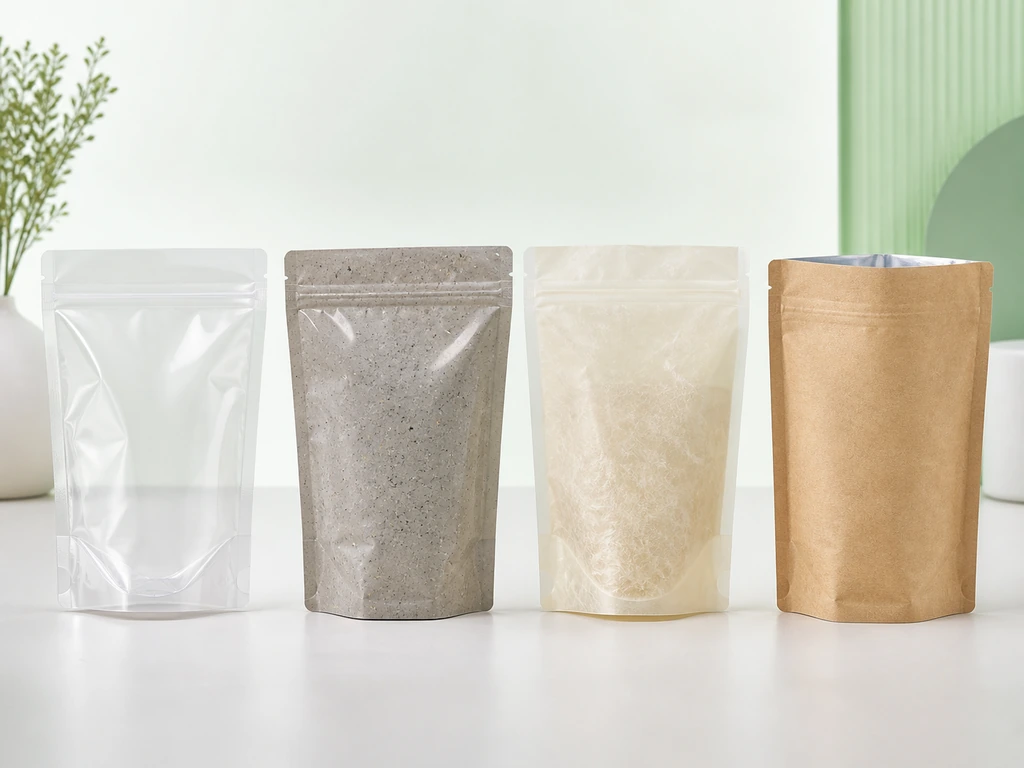
Reuse extends a bag’s life; it doesn’t change what happens when it dies. If you’re buying new packaging, for a pantry or a product line, here’s how the actual alternatives compare.
| Alternative | What It Is | How It’s Disposed | Barrier Trade-Off | Best For |
|---|---|---|---|---|
| Monomaterial PE pouch | Single-polymer pouch (no aluminum layer) | Store drop-off film recycling in many regions | Weaker light/moisture barrier than foil laminates | Short-shelf-life dry foods; brands targeting recyclability claims |
| PCR-content pouch | Pouch made with post-consumer recycled resin | Same as base material | Depends on base structure | Brands wanting recycled-content storytelling |
| Compostable pouch | Plant-based film, certified (e.g., ASTM D6400) | Industrial composting facility | Sensitive to moisture; shorter shelf life | Products consumed quickly; markets with composting access |
| Kraft paper pouch | Paper with a barrier lining | Paper recycling stream (depending on lining) | Poor moisture barrier without lining | Dry, light-weight products |
One honest caveat the sales pages won’t give you: recyclability claims trade against barrier performance, and barrier performance is what protects your product. The clearest public example is snack brand Regrained, which switched to a compostable cellulose film, watched products go stale in the field, and switched back to metallized film. Their conclusion: tons of spoiled food was worse waste than the wrappers (EcoEnclose, 2022). If you see “compostable” on a pouch, check for an ASTM D6400 certification behind the claim. That standard is what separates tested, compostable-in-industrial-facilities materials from marketing (ASTM International, 2021).
What the Reuse-and-Recycle Dilemma Means for Packaging Businesses
Think about the customer who reuses a zipper pouch for a month but retires a thin store bag after one cycle. Without knowing it, they’re running quality tests on packaging. Stack up what end users actually do: they cut heat-sealed bags open and accept that each bag gets shorter with every cycle. They sort their bags into grades without being asked. They wash, dry, and inspect. Together, those habits draw a surprisingly precise map of what the packaging market rewards.
Read as market data, three patterns emerge. First, reuse is how consumers compensate morally for a package that can’t be recycled. “I recycle everything I possibly can” is the recurring line when these bags come up in freeze-drying communities. That moral load means reusable-friendly design (a reliable zipper, a tear notch, a thickness that survives handling) is a real purchase driver, not a nice-to-have. Second, consumers don’t read spec sheets; they grade bags by “how many safe reuses I got.” The spec-sheet translation of their scorecard is closure type and thickness, the two variables most packaging pages bury. Third, when the reuse experience disappoints, the customer doesn’t complain to the bag maker; they leave the category.
For a brand, each pattern points to an action. The cheapest sustainability upgrade available is a reuse instruction, printed on the pack or on the product page, because it converts “not recyclable” from a guilt trigger into a usage feature. The cheapest differentiation is putting closure type and mil thickness in the customer-facing spec. Those are the two numbers that predict the reuse experience your customer will talk about. Neither costs anything to manufacture.
Now the supply-side view. The “not curbside recyclable” verdict applies to multi-layer film laminates; it does not apply to monomaterial structures. That single fact defines the buying situation for anyone selling products in these bags. Most buyers are small brands working stock-style: they test with small digital-printed runs, then scale custom orders. Their decision gate isn’t a board meeting. It’s whether they can answer a customer or retailer who asks, “Is this bag recyclable?” The failure cost of a wrong answer lands on the brand’s reputation, not on any supplier.
Which means the suppliers who win these accounts offer three things the question demands. First, a menu of recyclable structure options. Second, parameter data showing what barrier performance each option trades away. Third, a small-batch trial path so the brand can validate shelf life before committing. Certification status on the recyclable structures closes the last objection. Lead times matter too, because small brands refresh on their own product calendar, not the factory’s.
For brands weighing any of these trade-offs, we recommend starting the conversation before the spec sheet. Three questions matter: what’s recyclable, what you’d sacrifice, and how small a batch you can test with. At Baishen Pack, we publish our recyclable and compostable structure options alongside our standard materials, and you can talk to our packaging engineers before committing to any material switch.
References
- The Recycling Partnership. “Film and Flexibles Coalition.” 2026.
- U.S. Food & Drug Administration. “Phthalates in Food Packaging and Food Contact Applications.” 2024.
- ASTM International. “D6400-21 Standard Specification for Labeling of Plastics Designed to be Aerobically Composted in Municipal or Industrial Facilities.” 2021.
- TerraCycle. “Candy and Snack Wrappers Zero Waste Box.” 2026.
- EcoEnclose. “This Common Packaging is a Recycling Nightmare.” 2022.
- Baishen Pack. “Sustainability.”
- Baishen Pack. “Custom Mylar Bags.”
- Baishen Pack. “Contact.”
- Baishen Pack. “Home.”