
What Are Chip Bags Made Of? The Materials Behind Your Favorite Snack
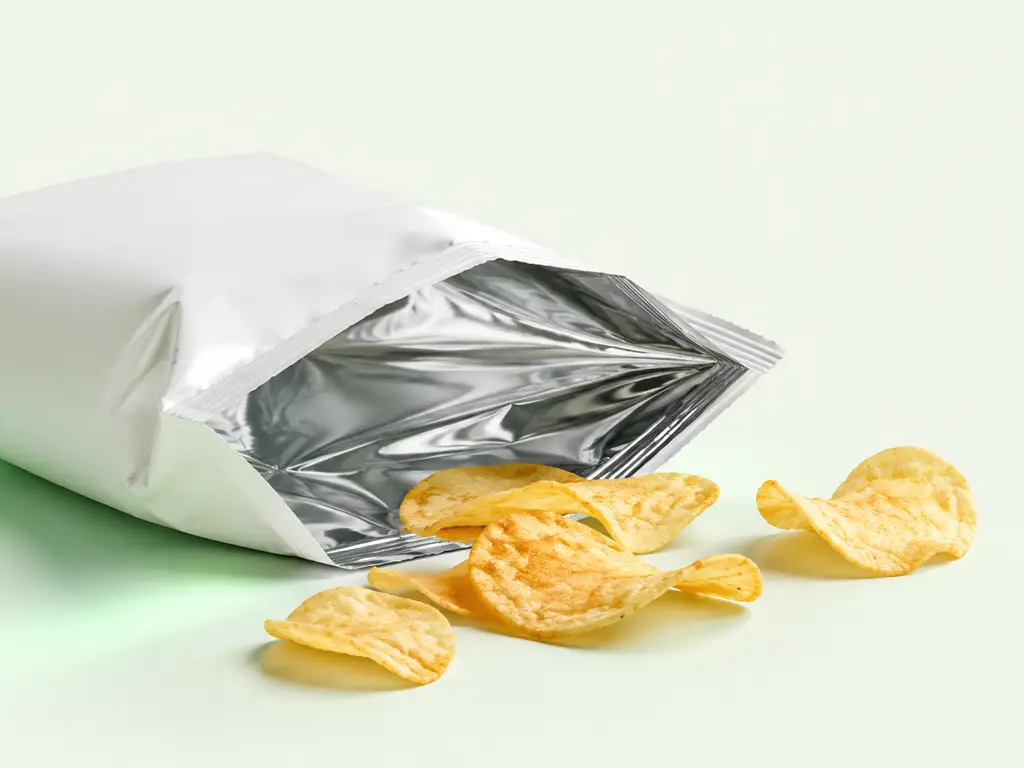
Open a bag of potato chips and you will notice something immediately: the inside is shiny, almost metallic. The bag itself is thin, light, and crinkly, yet it keeps chips fresh for months. If you have ever wondered what gives a chip bag these properties, you are in good company — “what are chip bags made of” is one of the most asked questions about everyday packaging.
The short answer is that a chip bag is not one material. It is a precision-engineered sandwich of three or more layers, each chosen for a specific job that no single plastic can do alone. What follows is a layer-by-layer breakdown of the materials that make up the modern chip bag, why they are chosen, and where the industry is headed next.
1. The Multi-Layer Secret of Chip Packaging
1.1 Why One Layer Isn’t Enough
If you were designing a chip bag from scratch, you would quickly find that no single material checks every box. The packaging needs to do at least six things simultaneously:
- Block oxygen — exposure to oxygen turns chip oils rancid and makes the product taste stale.
- Block moisture — humidity softens crisp chips and promotes microbial growth.
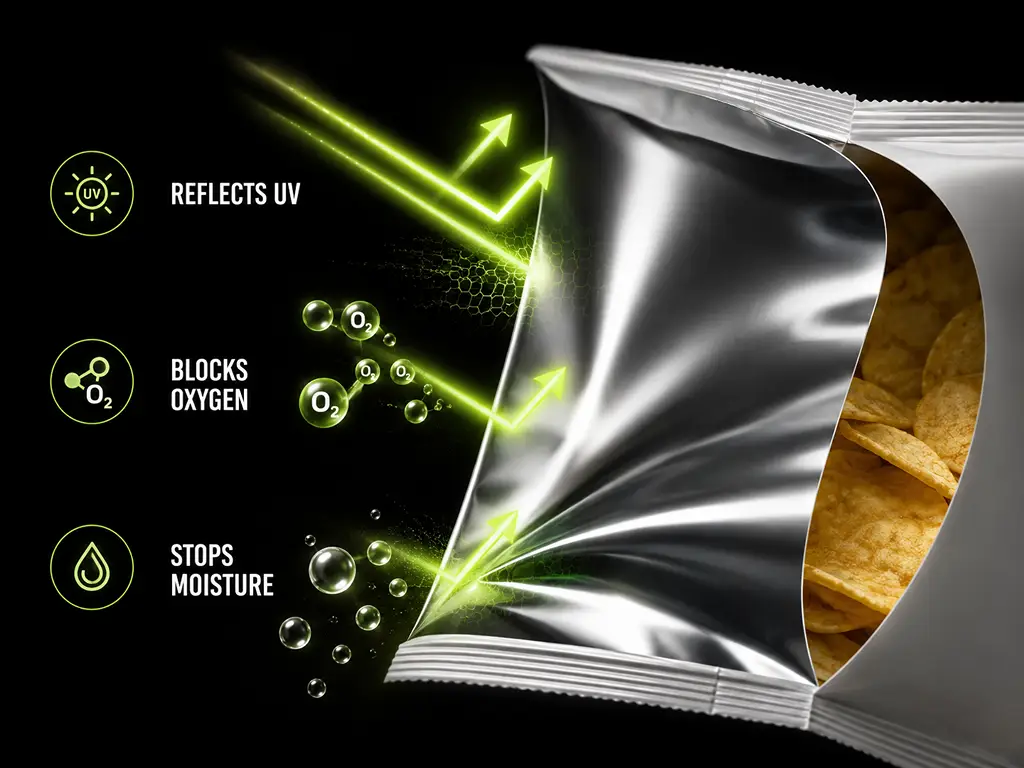
- Block light — UV radiation accelerates oxidation, especially of fried snacks.
- Provide mechanical strength — the bag must survive shipping, shelf stacking, and being grabbed by consumers without tearing or puncturing.
- Accept high-quality printing — brand graphics, nutrition facts, and barcodes all need a smooth, ink-receptive surface.
- Create a reliable heat seal — the bag must be sealed airtight on high-speed production lines at hundreds of units per minute.
No single polymer does all six well. Polypropylene has great moisture barrier and printability but terrible oxygen barrier. Polyethylene seals beautifully but lets oxygen pass through almost freely. Aluminum foil blocks everything but is expensive and prone to pinhole cracking when flexed. The solution, developed over decades of packaging engineering, is to laminate different materials together so each contributes its strength while compensating for the weaknesses of the others.
1.2 The Standard Layer Stack: Outside to Inside
A typical potato chip bag consists of three functional layers bonded together with polyurethane-based adhesives:
| Position | Material | Thickness | Primary Role |
|---|---|---|---|
| Outer layer | BOPP (biaxially oriented polypropylene) | ~15–20 µm | Print surface, stiffness, moisture barrier |
| Middle layer | VMPET (vacuum-metallized PET) | ~12–20 µm | Oxygen, light, and aroma barrier |
| Inner layer | LDPE or CPP (cast polypropylene) | ~40–60 µm | Heat seal, food contact, grease resistance |
These layers are bonded so tightly that they feel like a single sheet — you cannot peel them apart by hand. This is both the genius and the environmental challenge of chip bag design.
2. The Core Materials: Breaking Down Each Layer
2.1 Outer Layer — BOPP for Print and Protection
The outermost layer of most chip bags is biaxially oriented polypropylene, or BOPP. “Biaxially oriented” means the polypropylene film is stretched in both directions during manufacturing — lengthwise and widthwise — which aligns the polymer chains and dramatically improves stiffness, clarity, and tensile strength.
BOPP serves two critical functions. First, it provides the print surface. Chip bag graphics are reverse-printed on the inner side of the BOPP layer before lamination, meaning the ink is sandwiched between the outer film and the middle barrier layer. This protects the artwork from scuffing, scratching, and fading during distribution. Second, BOPP is an excellent moisture barrier. Its water vapor transmission rate (WVTR) in a laminated structure can be as low as 2.0 g/m²/day, which keeps ambient humidity from reaching the chips inside.
Some manufacturers use PET (polyethylene terephthalate) as the outer layer instead of BOPP, particularly when higher stiffness or heat resistance is needed. However, BOPP dominates the snack category because it offers the best balance of cost, clarity, and moisture protection.
2.2 Middle Layer — The Metallized Barrier
The middle layer is the star of the show. It is the reason the inside of a chip bag looks like a mirror. This layer is typically VMPET: vacuum-metallized polyethylene terephthalate.
Here is how it works: a thin PET film (around 12 µm) is placed in a vacuum chamber where aluminum wire is heated until it vaporizes. The aluminum vapor condenses onto the PET surface, forming a coating that is only 30 to 50 nanometres thick — roughly 1,000 times thinner than a human hair. Despite its microscopic thickness, this aluminum layer is what gives the chip bag its remarkable barrier performance.
A good metallized PET laminate can achieve an oxygen transmission rate (OTR) below 1.0 cc/m²/day and a WVTR below 3.5 g/m²/day. Premium metallized films used in snack packaging push these numbers even lower — below 0.1 units for both metrics — rivaling the barrier performance of solid aluminum foil at a fraction of the material cost and weight.
The metallized layer also blocks UV and visible light, which is critical because light exposure accelerates the oxidation of frying oils. Without this opaque barrier, chips would develop off-flavors within days of packaging.
It is worth distinguishing metallized film from actual aluminum foil. Foil (typically 7–9 µm of solid aluminum) offers a near-perfect barrier — effectively zero gas transmission — but is heavier, more expensive, and susceptible to flex cracking. Metallized film provides 99% of the barrier at a much lower cost and with better mechanical durability, which is why it dominates the mainstream chip market.
2.3 Inner Layer — PE and the Food-Contact Seal
The innermost layer, the one that actually touches your chips, is a heat-sealable polyolefin. The most common choice is low-density polyethylene (LDPE), typically 40–60 µm thick.
LDPE is chosen for three reasons. First, it is food-contact safe — LDPE is inert, non-toxic, and approved by food safety regulators worldwide for direct food contact. Second, it is heat-sealable — LDPE melts at approximately 105–115°C, forming a strong, airtight bond when pressed between heated sealing jaws on a packaging line. This seal integrity is what keeps the nitrogen flush gas inside and the oxygen outside. Third, LDPE is grease-resistant — it does not degrade or swell when in contact with the vegetable oils that coat most potato chips.
Some chip bags replace LDPE with CPP (cast polypropylene) as the sealant layer, especially when the outer layer is also BOPP. CPP offers better heat resistance than LDPE (sealing at 125–140°C) and higher clarity. A few premium bags use ionomer resins like Surlyn®, a DuPont material that seals through contamination — meaning it can form a strong seal even if oil or chip dust gets into the seal area, a common problem on high-speed snack lines.
- Excellent moisture barrier
- Reverse-print surface
- High stiffness & clarity
- WVTR: ~2.0 g/m²/day
- Blocks oxygen & moisture
- UV light protection
- 30–50 nm Al coating
- OTR: <1.0 cc/m²/day
- Food-contact safe
- Heat-seals at 105–115°C
- Grease & oil resistant
- Airtight closure integrity
3. Why That Shiny Interior Matters (and What It’s Made From)
People often ask “what are chip bags made out of” after noticing the metallic shine inside — and that shine is doing heavy lifting.
The aluminum coating on the metallized PET layer is what creates the mirror finish, but its real job is blocking the three things that make chips go bad: oxygen, moisture, and light. To put numbers on it, a standard unmetallized PET/PE laminate allows about 109 cc/m²/day of oxygen through and about 14 g/m²/day of water vapor. Add the metallized coating and those numbers drop by roughly 99% — to below 1.0 cc/m²/day for oxygen and below 3.5 g/m²/day for moisture.
This dramatic improvement is what gives an unopened bag of chips a shelf life of 2–4 months at room temperature. Without the metallized layer, the same chips would go stale in under a week.
The process — called physical vapor deposition or PVD — is also remarkably material-efficient. A single kilogram of aluminum wire can metallize enough film to produce tens of thousands of chip bags. This is why the environmental debate around chip bags focuses on recyclability rather than raw material consumption: the aluminum content per bag is so small that it contributes negligibly to the packaging’s total material footprint.
4. Beyond the Materials: Nitrogen and Sealing
The materials are only half the story. Once a chip bag is filled, manufacturers flush the headspace with nitrogen gas (N₂) before sealing. Nitrogen is inert — it does not react with chip oils, does not support oxidation, and does not affect flavor. Since nitrogen makes up about 78% of the air we breathe, it is abundant, cheap, and food-safe.
The nitrogen serves two purposes. First, it displaces oxygen, preventing oxidation inside the sealed bag. Second, the slight positive pressure created by the nitrogen cushion protects the chips from physical crushing during transport and stacking. This is why chip bags feel slightly puffy when unopened — you are pressing against a nitrogen pillow.
The combination of high-barrier materials and nitrogen flushing is what makes modern snack packaging so effective. The multi-layer film keeps external oxygen and moisture out; the nitrogen flush removes internal oxygen; and the LDPE heat seal locks everything in. The result is a package that can sit on a shelf for months while preserving the crunch and flavor of freshly fried chips.
5. The Recycling Problem (and What’s Changing)
5.1 Why Multi-Material Bags Can’t Be Recycled Normally
If chip bags are made of polypropylene, PET, aluminum, and polyethylene, the logical next question is: can these materials be separated and recycled?
The practical answer, for now, is no — at least not through standard curbside recycling. The layers are bonded with crosslinked polyurethane adhesives that do not dissolve in water and cannot be economically separated at scale. A recycling facility receives a chip bag as a single unit; there is no mechanical process that cleanly splits it back into BOPP, metallized PET, and LDPE. Even if the layers could be separated, the metallized coating contaminates the PET recycling stream, and the mixed polymer fractions have little market value.
This is why almost all chip bags end up in landfills or incinerators. Specialized programs like TerraCycle do accept multi-layer snack wrappers, but these are mail-in programs that capture a tiny fraction of the total volume.
5.2 The Future: Mono-Material and Bio-Based Alternatives
The packaging industry is actively working on solutions, and the most promising direction is mono-material design.
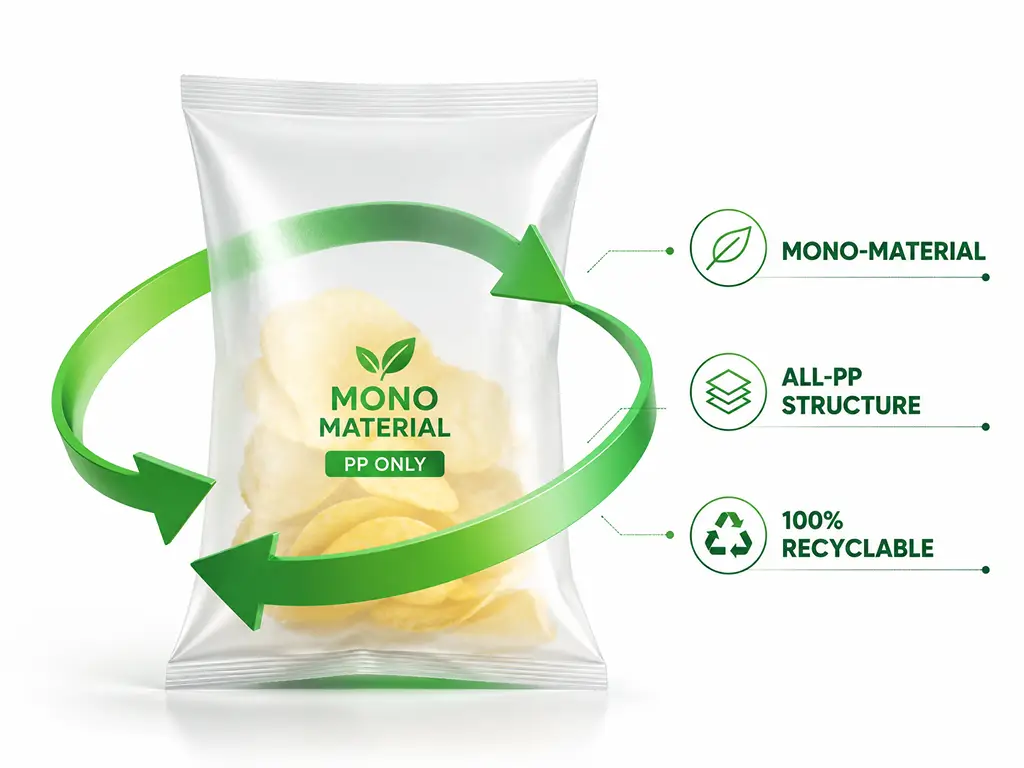
The idea is simple: instead of laminating different polymer types together, a mono-material chip bag uses multiple layers of the same polymer family — typically all-polypropylene (PP) or all-polyethylene (PE) — with each layer engineered to perform a different function. The outer PP layer provides printability and stiffness; a middle PP layer with an ultra-thin aluminum oxide (AlOx) or silicon oxide (SiOx) coating provides the gas barrier; and the inner PP layer provides the heat seal. Because all layers belong to the same polymer family, the entire package can enter existing PP or PE recycling streams without separation.
This is not a laboratory concept. Mars has already run mono-PP flow wrap on Snickers production lines in China. Major film manufacturers now offer high-barrier MDO-PE (machine-direction oriented polyethylene) and BOPP films with OTR and WVTR values approaching those of traditional metallized laminates. The EU’s Packaging and Packaging Waste Regulation (PPWR) mandates that all packaging be recyclable by 2030, and major retailers including Tesco and Carrefour are pushing suppliers toward mono-material formats.
Bio-based and compostable alternatives are also emerging. Films made from polylactic acid (PLA) or polyhydroxyalkanoates (PHA) can biodegrade under industrial composting conditions, though they currently face challenges with moisture sensitivity and cost. For now, mono-material PP remains the most commercially viable path toward sustainable snack packaging at scale.
For snack brands and food manufacturers evaluating their packaging strategy, the shift toward mono-material and high-barrier recyclable films is no longer a future consideration — it is an active transition underway across the industry. Custom flexible packaging manufacturers already offer mono-material pouches with full print customization, barrier engineering, and low minimum order quantities for brands testing new sustainable formats.
References
- The Takeout — Why Are Potato Chip Bags So Shiny Inside?, 2025.
- NPR — The Weird, Underappreciated World Of Plastic Packaging, 2014.
- Packaging Warehouse — Metallisation Explained: Structure, Barrier & Recycling
- UFlex — Innovative Product Offerings Q3 FY24, The Packman, 2024.
- Packaging Technology Today — How Tomorrow’s Snacks Are Changing Today’s Packaging, 2025.
- Perfect Packaging — 2025 Sustainability Trends: Flexible Packaging, 2025.
- Baishen Pack — Custom Flexible Packaging Manufacturer